Excavator hydraulic oil change interval by brand and oil

Excavator hydraulic oil intervals hinge on the filter too: Komatsu’s 5,000 hours drops to 2,000 with a non-genuine one. Six makers’ rules compared.
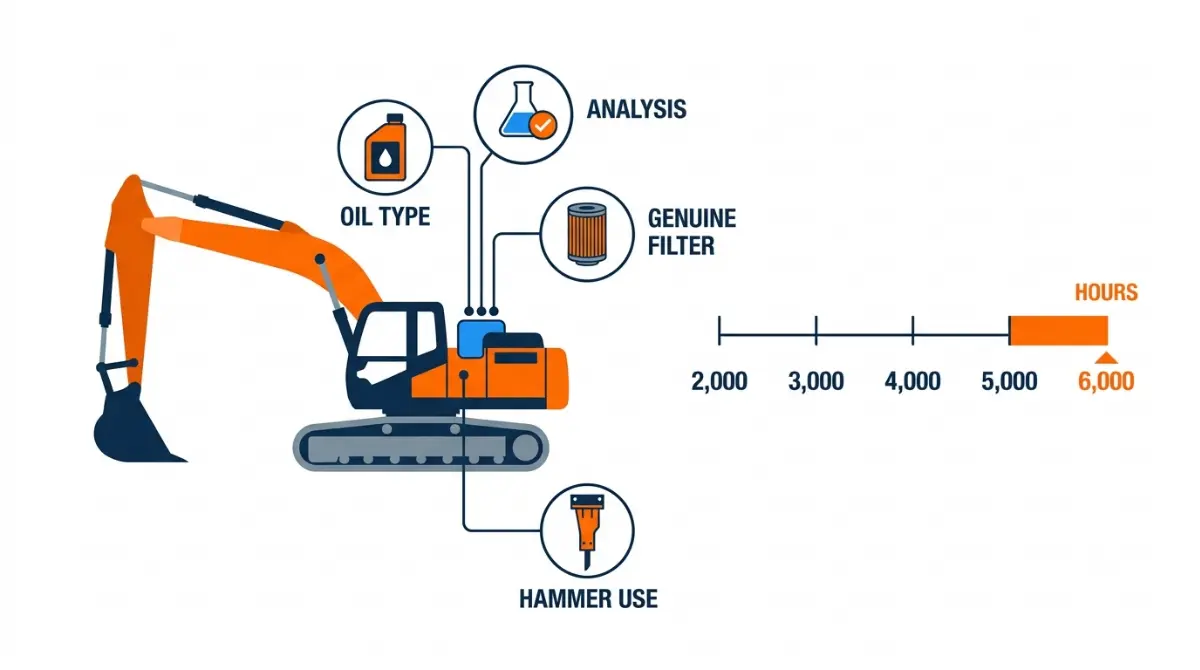
Table of Contents
Intervals and sources checked on October 28, 2026.
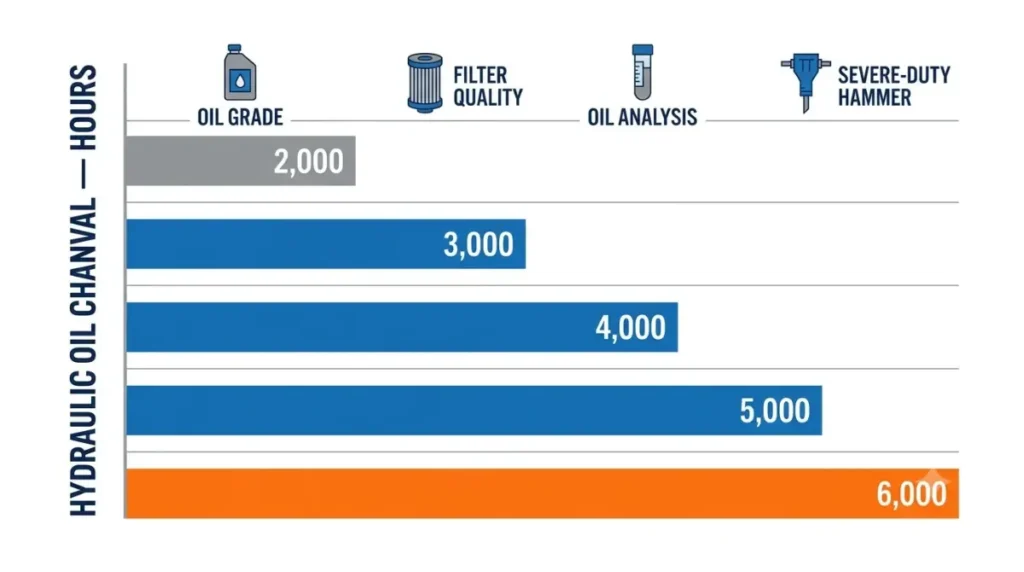
On mid-size crawler excavators in the 20- to 26-tonne class, the manufacturers’ own documents set the standard hydraulic oil change at 2,000 to 5,000 hours, and Cat reaches 6,000 only on its HYDO Advanced oils backed by S·O·S oil analysis. Which figure fits your machine turns on the oil in the tank, the brand of return filter, whether the oil gets sampled, and how many hours go on a hammer.
Mini excavators under 6 tonnes run shorter, model-by-model schedules, covered in the mini excavator maintenance schedule by brand.
Full-size excavator intervals by brand
Six makers publish the figures below across eight documents, and each one attaches its own condition.
| Applies to | Standard oil change, hours | What moves it | Manufacturer document (dated 2014 to 2026) |
|---|---|---|---|
| Cat excavators on HYDO 10W | 2,000 | 4,000 with S·O·S samples at 500-hour intervals; filter interval unchanged | Cat hydraulic oil data sheet (dealer-hosted copy) |
| Cat excavators on HYDO Advanced 10 | 3,000 | 6,000 under the same sampling condition | Same Cat data sheet and Cat parts listing |
| John Deere E210 to E260LC (PIN ranges in the guide) | 4,000 | Hammer work follows a separate schedule; fluid analysis can adjust it | Deere E260 quick reference guide, July 2022 |
| John Deere 210G and 210GLC on Hitachi Super EX 46HN | 5,000 | Fluid analysis can adjust it | Deere 210G maintenance planner, 2014 |
| Komatsu, most machines | 5,000 with genuine filters | 2,000 with non-genuine filters, which also cut the filter change from 1,000 to 500 | Komatsu Australia news page, December 2017 |
| Hitachi excavators on Super 46HN | Up to 5,000 | A maximum; the page gives no model figures | Hitachi Construction Machinery Americas |
| Case CX210D, Tier 4 Final | 5,000 | Hydraulic filter on its own 1,000-hour interval | Case CX210D specifications |
| Develon, genuine oil | 2,000 standard grade, 4,000 premium | 1,000 with non-genuine oil | Develon genuine oil page |
Three rows come from regional pages outside the US: Komatsu Australia, Case South America and Develon CIS.
Note: Each row summarizes one published figure. The manual for your serial range governs, because intervals change between generations of the same model.
Develon’s North American excavator product manager puts the usual mid-size recommendation at the shortest standard figure above. Four of the eight rows beat it.
The oil, the filter and a lab sample move the number
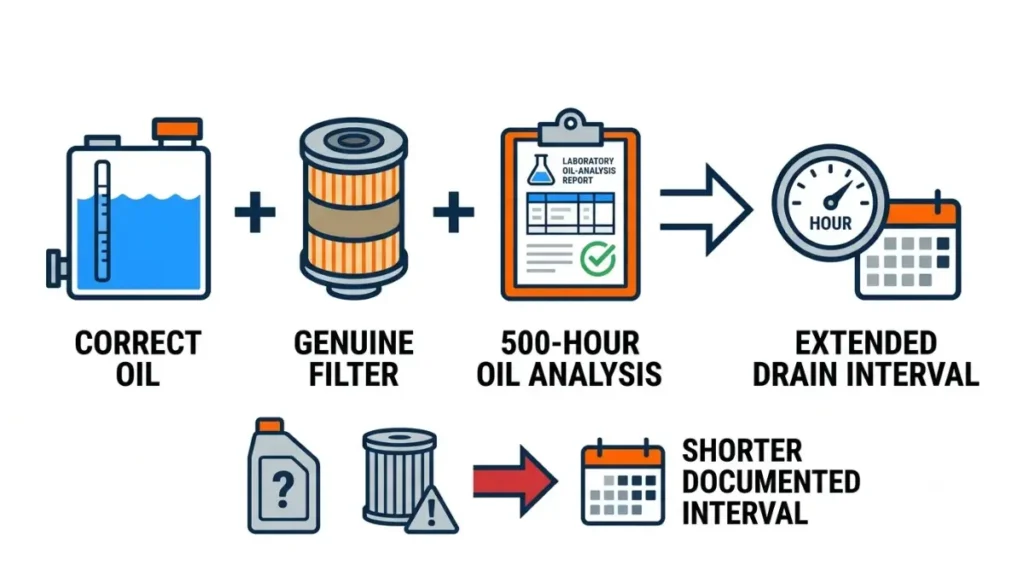
On a Komatsu, the filter decides which figure applies. Komatsu puts the gap down to finer micron ratings and more media in its own elements, so an aftermarket filter brings the oil change forward even with the same oil in the tank.
Cat works in two steps. Moving from HYDO 10W to the Advanced 10 oil adds 1,000 hours, and S·O·S sampling doubles whichever figure you start from; Cat Bio HYDO Advanced carries the same sampled drain figure on its parts listing. At an assumed 1,500 hours a year, that works out to a change every 16 months on HYDO 10W without samples, and one every 4 years on Advanced 10 with them.
The oil brand carries Develon’s figure, and non-genuine oil cuts its premium-oil interval to a quarter. Hitachi’s 5,000 is a ceiling.
On a used machine, the longer figures apply only when the service records name the oil and filter brands. Without those records, plan on the standard row and have the oil sampled at the first service; the used excavator inspection order covers what else to pull from the paperwork.
Hammer work on a separate schedule
Log hammer hours apart from total hours. Before the next drain, ask the dealer service department for the hammer schedule that matches your serial number.
The one hammer warning among these documents is a footnote to the Deere E-series figure. It sends machines running a hydraulic hammer to a separate Hydraulic Hammer Attachment schedule in the operator’s manual. No other document listed prints a hammer figure.
20-tonne class: oil per drain and per 1,000 hours
A machine’s fill divided by its interval in thousands of hours gives the gallons of hydraulic oil it goes through for every 1,000 hours of work, whatever your dealer charges for a drum.
| Machine and plan | Fill, gal (liters), manufacturer documents | Interval, hours | Gallons per 1,000 hours, worked out |
|---|---|---|---|
| Cat 320 GC, Advanced 10 oil, no samples | 63 (240) | 3,000 | 21.0 |
| Cat 320 GC, Advanced 10 oil, S·O·S samples | 63 (240) | 6,000 | 10.5 |
| John Deere E260 | 68.7 (260) | 4,000 | 17.2 |
| John Deere 210G, Super EX 46HN | 35.7 (135) | 5,000 | 7.1 |
The Cat fill comes from Cat’s 320 GC service page (serial prefix DKJ), and the Deere fills from the two Deere documents linked above. The intervals are as listed above. The last column is the fill divided by (interval ÷ 1,000).
To budget, multiply the last column by your price per gallon and by your yearly hours divided by 1,000. A 320 GC on the sampling plan at 1,500 hours a year uses 10.5 × 1.5 = 15.75 gallons a year; without samples it uses 31.5.
On a PC200-8 over 6,000 hours, oil plus filters came to NZ$0.22 an hour with genuine filters, against NZ$0.56 to NZ$0.67 with two aftermarket brands, in Komatsu New Zealand’s worked example at its 2017 prices. The cheaper filter made the costlier hour.
How hydraulic service fits into a full maintenance budget is worked through in how maintenance adds up per machine hour. For the 20-tonne class against the rest of the range, see running costs by excavator size class.
Hitachi attributes 90% of hydraulic component failures to oil problems such as old or contaminated oil. That is the manufacturer’s own figure, and the page cites no study behind it.
Can a clean oil sample stretch the interval?
Yes on a Cat, provided the S·O·S samples come in at 500-hour intervals and the filter stays on its normal schedule. A hydraulic oil sample each 500 hours is also on the Deere E-series schedule, where fluid-analysis results can change the intervals. The Komatsu, Hitachi, Case and Develon documents in the first table offer no sampling extension, so on those machines a good report supports the printed figure and nothing longer.
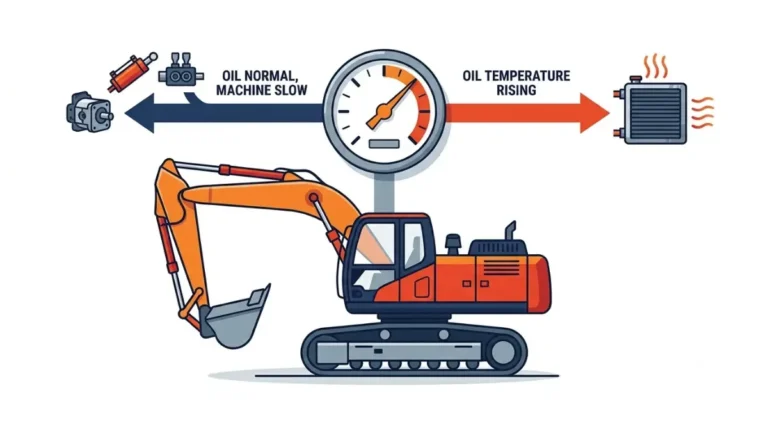
A sample can also bring the drain forward. Drain early when the lab flags the oil, or when the hydraulics slow down once the oil runs hot.
Hazard: Excavator hydraulic tanks can hold pressure after shutdown, and oil at working temperature scalds skin. The manual’s pressure-release step comes before any cap or plug is loosened. Without that page in hand, the drain belongs to a qualified equipment technician.
Filter timing at each drain
Is the hydraulic filter changed every time the oil is?
Deere’s E210 to E260LC change the return filter on a 2,000-hour clock, so each oil change lands on a filter change, with one more filter in between. Case’s CX210D filter interval sits in the interval table above.
Check your serial range, then book the 500-hour sample
- Read the serial prefix or PIN from the machine plate.
- Find the operator’s manual for that range and note the hydraulic oil interval, plus any hammer schedule that goes with it.
- Write down which oil and filter brands are in the machine now.
- On a Cat running the Advanced oil or a Deere E-series, book the first sample through the oil analysis program your manual names.
At the parts counter, ask whether the filter on the shelf is the genuine element your interval assumes. On a Komatsu, that one answer moves the next drain by 3,000 hours.