Excavator Hydraulics Slow When Hot? Test Before Buying a Pump

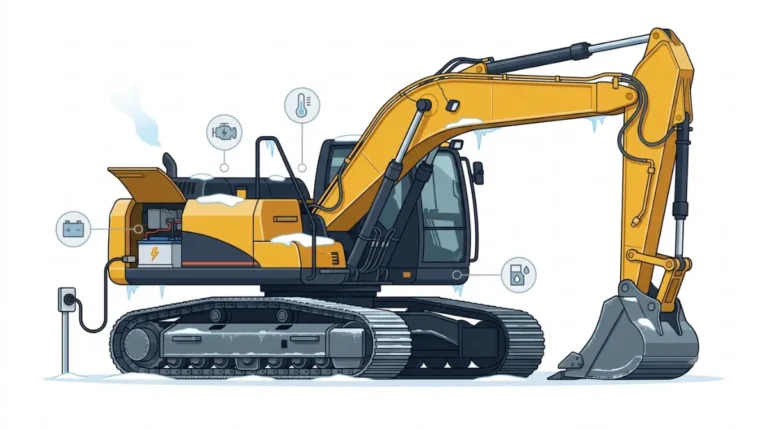
Hydraulics slowing on a hot excavator? Cat’s 320 manual treats hot hydraulic oil as a Category 3 warning: stop the engine, check level and cooler.
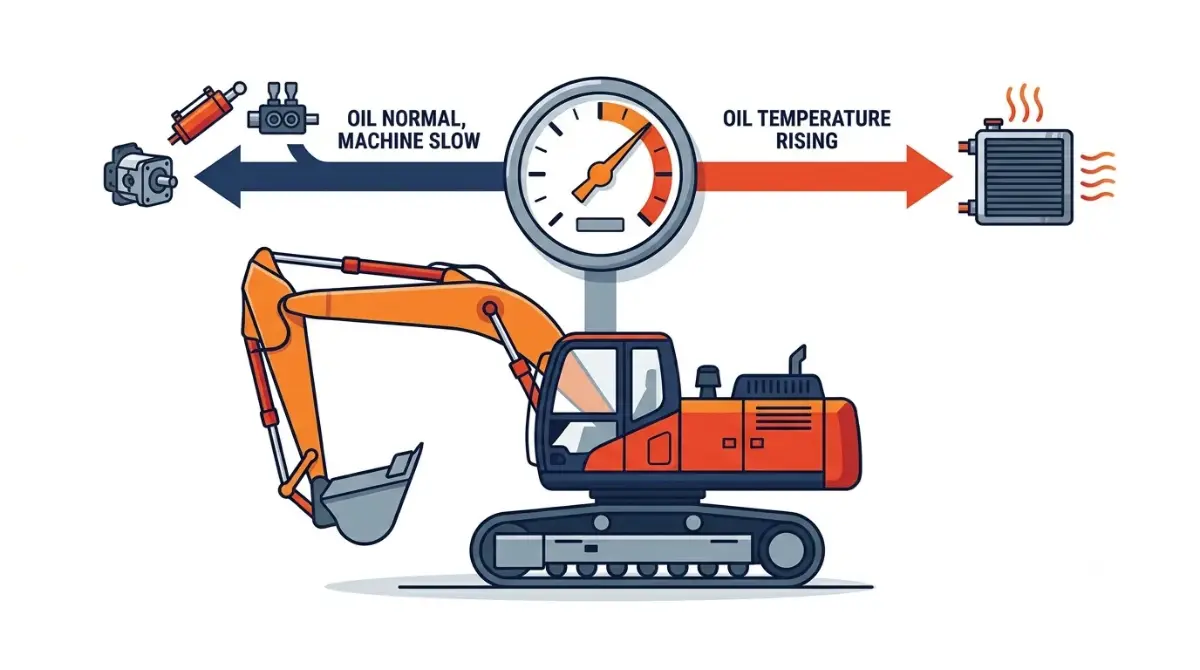
Table of Contents
Sources checked on October 30, 2026.
An excavator that runs at full speed cold and slows once it warms up has one of two problems. Either it is making more heat than its cooling system can shed, or it is losing flow inside worn pumps, valves or cylinders. One temperature reading, taken when the slowdown starts, tells you which to chase before anyone quotes you a pump.
That holds for hydraulic crawler excavators of any size and emissions tier, from minis to full-size machines. The operator’s manual for your serial range sets every value. Both causes start from the same fact. Hydraulic oil thins as it heats, and its viscosity index, as a Bureau of Reclamation maintenance bulletin defines it, measures how much; a higher number means less change. Caterpillar’s own checks for internal cylinder leaks and main pump flow problems, the cycle-time tests in its hydraulics test guide, are run with the oil already warm.
Read the oil temperature before you open anything
Start in the cab. Find the hydraulic oil temperature on the monitor or gauge, and note the number showing when the boom starts to lag.
No single “normal” figure covers every machine. Cat’s test guide brings the oil to 131°F (55°C), give or take 9°F (5°C), before testing, and times the cylinders with it at 122°F (50°C) or more. Those are test conditions. Neither one is a limit.
The limit is the warning on your monitor. Cat’s operation and maintenance manual for the 320 and 323 treats hydraulic oil that is too hot as a Category 3 warning. The action it gives: stop the engine immediately, then check the oil level and the oil cooler for debris.
That reading splits the problem in two. Oil climbing toward the warning points you at cooling. Oil sitting at its usual reading while the machine still slows rules out the cooling checks and leaves the flow tests further down.
Hazard: The tank holds hot oil under pressure. Cat’s manual says not to remove the pressure cap while it is hot, and the filler cap comes off only after shutdown, once it is cool enough to touch bare-handed. Check for leaks with a piece of board or cardboard, never a hand: oil from a pinhole can inject into skin, and an injection needs immediate treatment from a doctor familiar with that injury. Hot oil escaping under high pressure is also a fire risk. OSHA’s 1991 hazard bulletin on hydraulic system modifications describes it spraying out as an easily ignited mist.
Oil level and a packed oil cooler
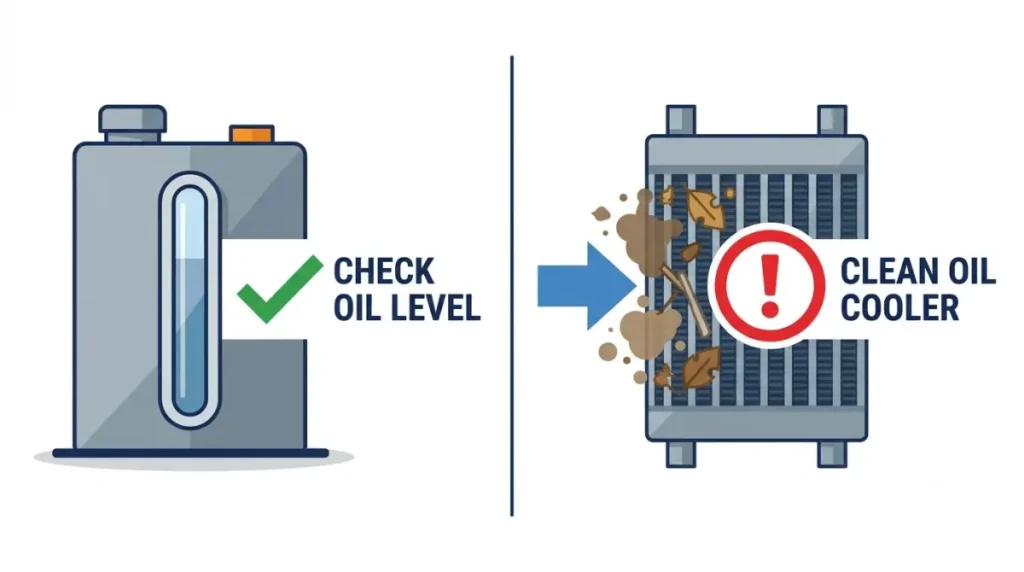
The same two checks appear in Cat’s mini excavator book, the operation and maintenance manual for the 301.5 through 302 CR: oil level, and debris in the hydraulic oil cooler. Neither needs a tool.
- Park on level ground, lower the work tool, lock the controls, shut the engine off and let the machine cool.
- Read the hydraulic oil sight gauge the way your manual describes.
- Look at the oil cooler and radiator cores for packed dirt or an oily film.
- Clean the cores by your manual’s method. Cat’s cleaning limits are air at no more than 30 psi with the nozzle deadheaded, a chip deflector and eye protection, or water below 40 psi kept off electrical connectors.
- Work the machine back up to temperature and watch whether the reading still climbs.
Low oil or a packed core can be fixed the same day. A wet hose, or a cooler that runs hot again soon after cleaning, goes to a qualified equipment technician. Those checks mean working around pressurized lines and a spinning fan.
When the coolant gauge climbs too
Cat’s manual handles an engine coolant temperature that is too high the same way. You stop, check the coolant level and the radiator for debris, and check the fan drive belts for the water pump. If both warnings show up on the same afternoon, both rows of that table begin at the cooling cores.
Does your oil grade suit a summer afternoon?
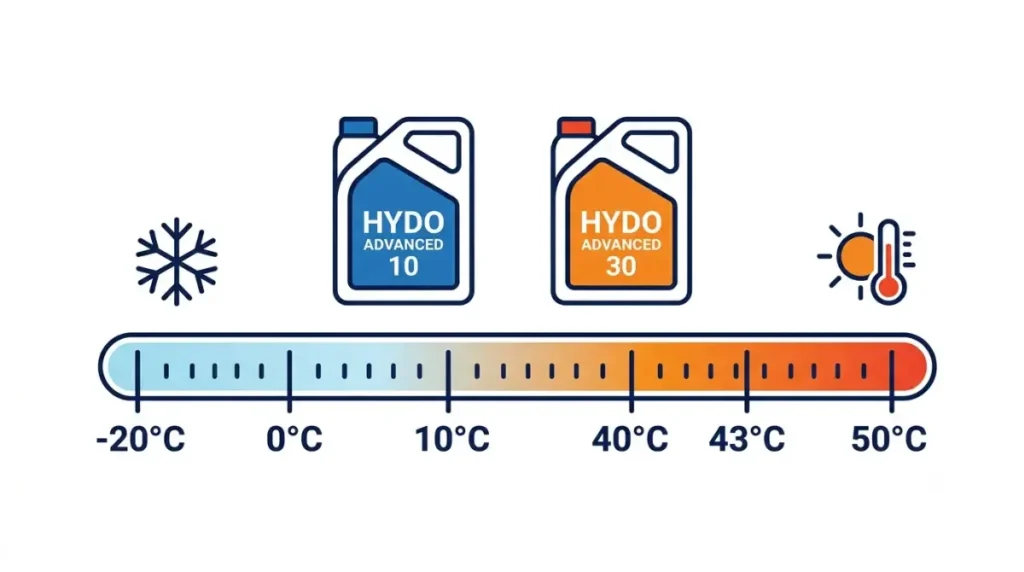
Summer heat is the other half of the oil question. Cat’s hydraulic oils carry ambient ratings, and these two grades sit far apart.
| Cat hydraulic oil | SAE grade | Ambient range Cat rates it for, °F (°C) | Applies to |
|---|---|---|---|
| HYDO Advanced 10 | 10W | −4°F to 104°F (−20°C to 40°C) | Cat machine hydraulic systems, wide temperature use |
| HYDO Advanced 30 | 30 | 50°F to 122°F (10°C to 50°C) | Cat machine hydraulic systems in consistently hot climates |
Sources: Cat HYDO Advanced 10 datasheet; Cat HYDO Advanced 30 product listing.
On an afternoon hotter than the 10W grade’s top rating, a machine filled with it is working past the range Cat rates that oil for. The machine has a ceiling as well. The same manual sets the standard 320 and 323 configuration for ambient temperatures of 0°F to 109°F (−18°C to 43°C), with special configurations available through Cat dealers.
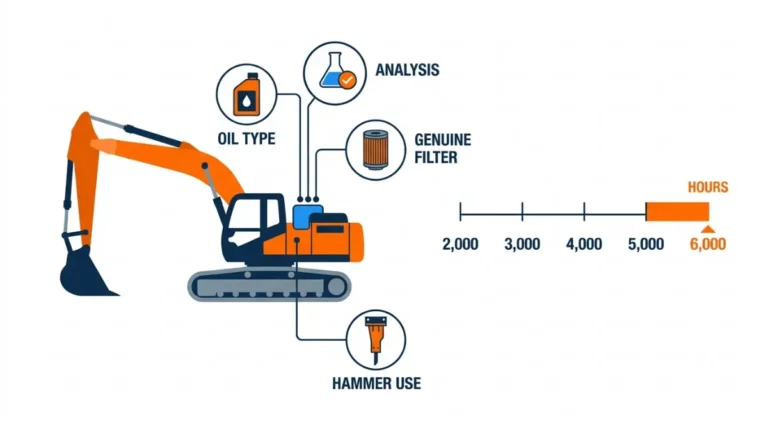
For other makes, the oil grade comes from the lubricant section of the manual. Check the grade it gives, and any temperature range beside it, against your summer highs before the next oil change. Brand rules on oil type, and how they move the drain interval, are in the excavator hydraulic oil change interval guide by brand.
The gauge reads normal and the machine is still slow
A normal reading takes the cooling checks off the list, and the slowdown moves to the flow tests. Cat lists increased cycle times and reduced cylinder speed among the repair indicators on its hydraulic cylinder self-service page.
What you can bring to those tests is a pattern. Note whether every function slows together or one stands out (boom, stick, bucket, swing or travel), and whether it happens only under load. Those notes give the technician a place to start.
Leave the gauges to the dealer. Pressure readings on pump or pilot circuits, and any change to a relief setting, are part of the dealer test below. Any reading outside the acceptable range in Cat’s test guide goes to a technician.
Engine power loss can look the same
Sometimes the slowdown starts in the engine. Cat’s 320 manual lists an engine fault detected by the ECM as its own Category 3 warning, with a call to the Cat dealer as the required action. On a 320, the engine slowdown versus hydraulic slowdown split, generation by generation, is worth reading first. Any stored code can be checked against how Cat CID and FMI codes are built.
The hot test a dealer runs before quoting a pump
Ask what will be measured, and at what oil temperature, before you approve any part. Caterpillar puts its dealer hydraulic inspection on a 12-month or 2,000-hour cycle. Pressures, implement cycle times and drift are checked alongside an engine performance test.
| Test | What it narrows down | Who runs it |
|---|---|---|
| Cylinder cycle times, oil warm | Internal cylinder leaks, main pump flow | Owner or dealer technician |
| Cylinder drift | How far a cylinder creeps against the machine’s specification | Owner or dealer technician |
| System pressure checks | Pressures against the specification, with implements stalled | Dealer technician |
| Engine performance test | The engine’s side of a slowdown, checked with the hydraulics | Dealer technician |
| S·O·S oil sample | Oil condition and the condition of hydraulic components | Cat dealer S·O·S service |
Sources: Cat’s hydraulics test guide; Caterpillar Hydraulic System Support brochure.
The pressure checks run the system at maximum pressure with the implements stalled. That work belongs to a dealer technician following Cat’s service procedure.
If the results do point at the pump, the options in Cat’s guide to maintaining the hydraulic pump are a new pump, a dealer rebuild or a Cat Reman unit. A machine down for testing may need a stand-in, and the rental and hourly costs by excavator class show what that runs for your size.
Before you sign: get the hot cycle-time and pressure readings in writing before a pump goes on the work order. Each reading should sit beside its specification and the oil temperature it was taken at.
Write down three readings before you call for service
Three notes turn a service call into a test plan:
- Oil temperature when the slowdown starts, and minutes since a cold start
- Ambient temperature that afternoon
- Which functions slow (boom, stick, bucket, swing, travel) and whether the engine pulls down
Bring them to the service call so the hot test runs at the temperature where your machine loses speed. If the tracks stop altogether instead of slowing, the excavator won’t move check order covers that fault.