Used excavator inspection that finds worn parts before you bid

A used excavator’s IronClad report leaves hydraulics, leaks and load faults outside dispute coverage, so get the undercarriage measured before bid day.
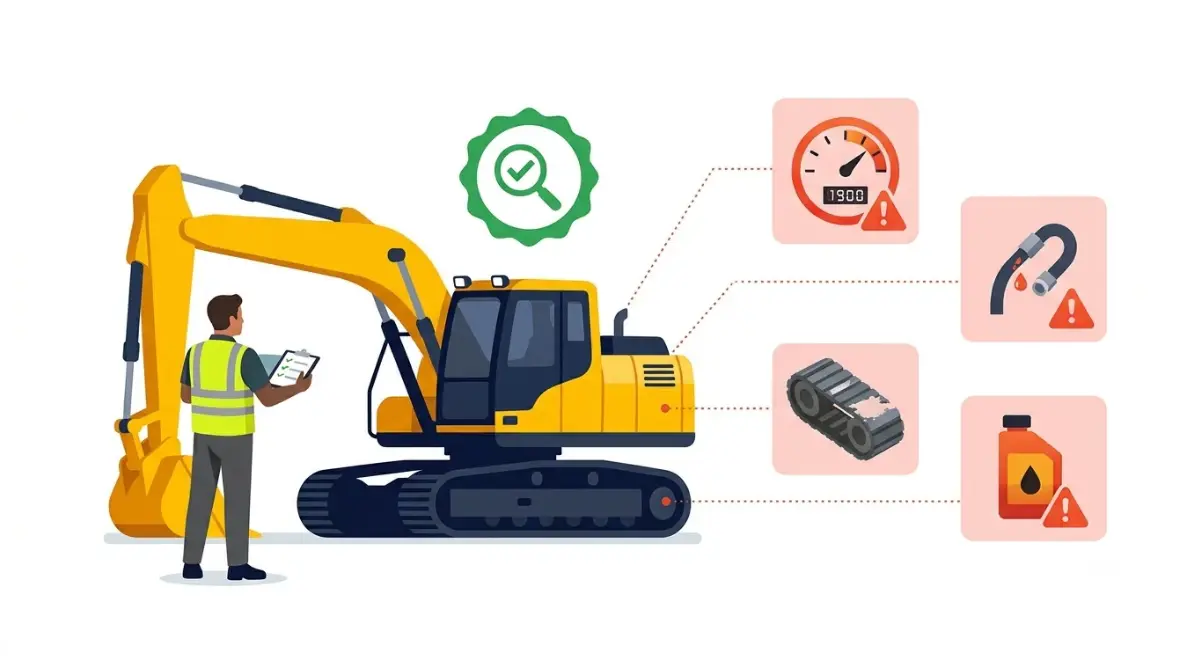
Table of Contents
Rates and sources checked on November 2, 2026.
An auction inspection report records what one inspector saw on one day, and Ritchie Bros.’ IronClad Assurance leaves hours, hydraulic systems and leaks of any kind outside its dispute coverage. Those gaps, plus an unmeasured undercarriage, are what to check on a used crawler excavator before you bid.
These checks cover steel-track crawler excavators at US auctions and dealer lots, pre-Tier 4 through Tier 4 Final. For sizes and prices, see what each excavator class costs new, used and rented.
What the auction report covers and what it leaves to you
An IronClad badge on a Ritchie Bros. or IronPlanet listing means an inspector rated and photographed the major systems. What you can dispute after the sale is narrower, and the exclusions fall on an excavator’s costliest parts.
| Item (US listings) | IronClad dispute coverage (policy revised December 6, 2017) | Your check before bidding |
|---|---|---|
| Hours on the meter | No guarantee; inspectors report only what they can see | Match the reading to dated records |
| Hydraulic systems and leaks of any kind | Excluded | Watch the running checks and get a fluid sample |
| Faults that show only under load, such as digging or lifting | Excluded | Time the functions with the oil hot |
| Compression and other tests needing diagnostic equipment | Excluded | Ask for a dealer technician’s readings |
| Electronic control modules and consumables such as batteries and filters | Excluded | Price them as your own risk |
| Conditions visible in the report photos | Excluded, even when the written comments skip them | Zoom in on every photo |
Source: IronClad Assurance Policy and the IronClad Assurance overview.
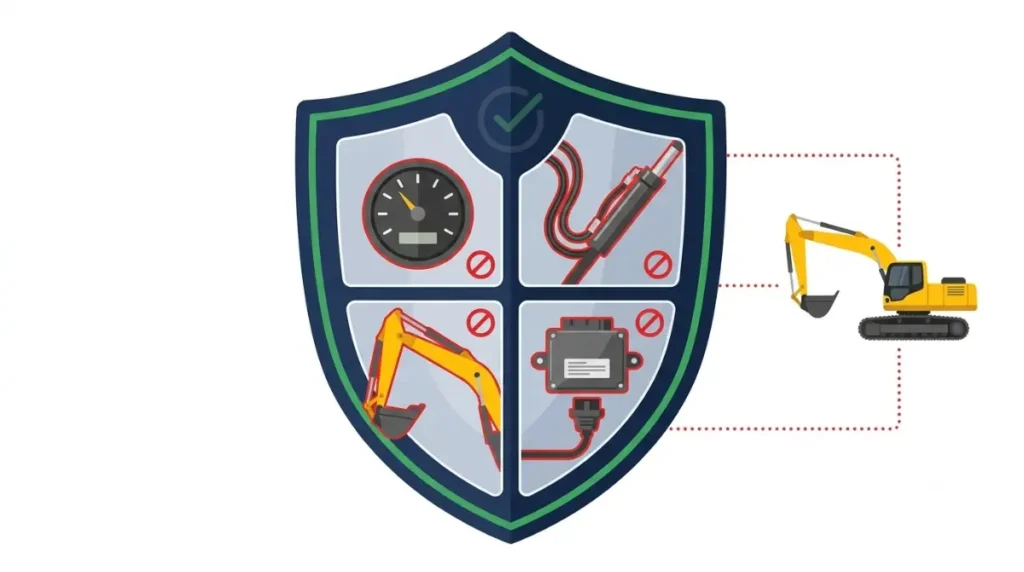
Some reports add lab analysis of oil and fluids for wear metals; open that part first when it exists. Live-auction listings add another limit: only select undercarriage photos are shown, as on a 2013 Volvo EC250DLR long-reach excavator listed at North East, Maryland.
The hour meter is a claim the auction won’t back
The Volvo’s meter read 2,552 hours, and the inspector added that the machine’s age and condition pointed to more. Ritchie Bros. makes no guarantee on hours in the IronClad policy or on that listing; the report reflects only what can be seen.
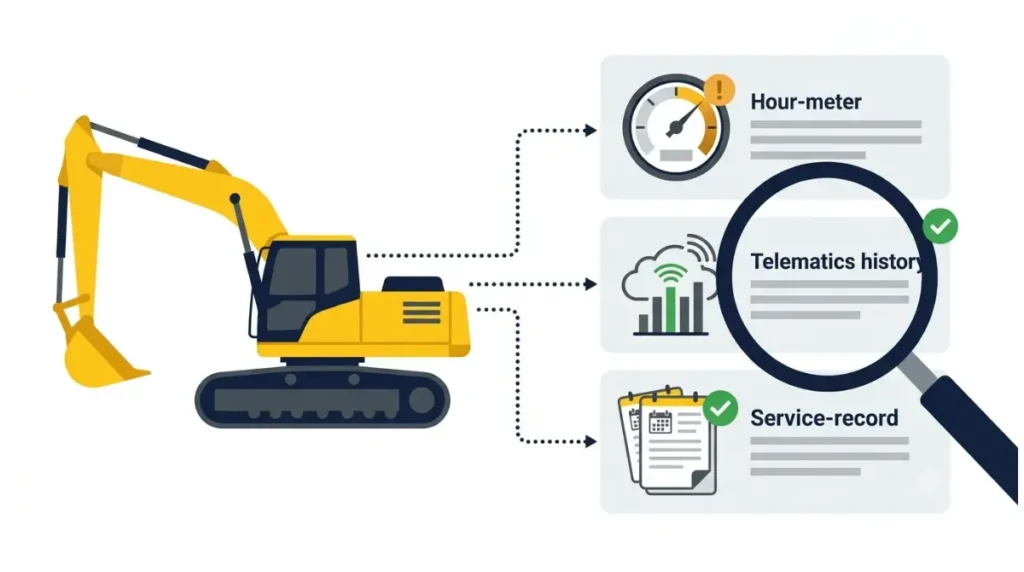
Until records back it, the reading is the seller’s number. Lining a telematics hour history up against dated service entries is covered in how to check an excavator’s hours against telematics and service records.
Undercarriage wear: a measured number before bid day
Cat dealers measure undercarriage wear at no cost through Custom Track Service and report wear patterns and percentages. For another brand, ask its dealer service department whether it will measure links, rollers, idlers and sprockets against the maker’s wear limits before bid day.
Book it while the machine is still on viewing. A measurement after the hammer falls only prices what you already own.
Costs by size class are in what a worn excavator undercarriage costs to replace.
Running checks to watch from outside the swing radius
Hydraulic oil goes to 131°F, plus or minus 9°F (55°C ± 5°C), before Cat’s hydraulic test guide times anything, so ask the seller’s operator to warm the machine before the stopwatch comes out.
Cycle times and drift with the oil hot
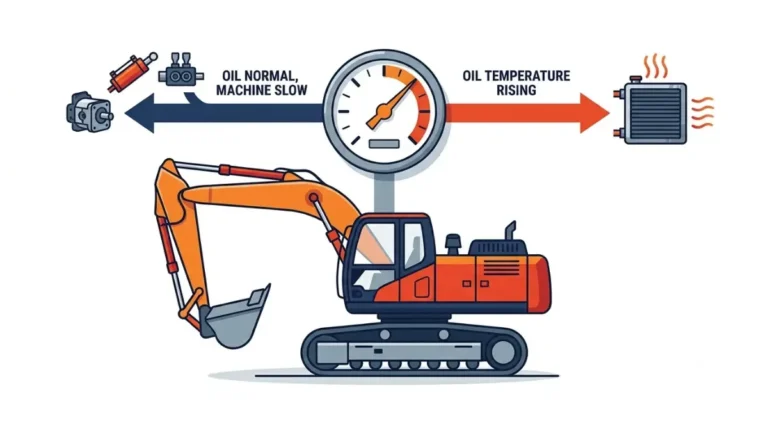
Slow cylinder cycle times can point to internal cylinder leaks or main pump flow problems. Drift is how far a marked cylinder rod creeps in three minutes with the engine off. Each result means something only beside the spec in that machine’s service instructions. If a function slows as the oil heats, why an excavator’s hydraulics slow down when hot covers the likely causes.
Space is the snag at a crowded sale: most machines need 82 to 98 feet (25 to 30 m) of open ground plus their own length in every direction for these tests.
Swing bearing and pin play
A qualified equipment technician measures play in the swing bearing and the boom, stick and bucket pins against the service manual for that serial range. Ask the dealer service department for those readings in writing, each beside its specification.
Hazard: A pinhole leak in a pressurized hydraulic line can inject fluid through skin, an injury that needs emergency medical care. University of Minnesota hydraulic safety guidance is blunt: never check for leaks with your hands. Leave tracing a leak to the technician, and stay outside the swing radius and out from under a raised boom while the machine runs.
Is there an oil sample history?
Past fluid reports are the closest look inside the engine you get before the sale, so ask the seller for every one. If there are none, ask the auction site whether a sample can be drawn during viewing.
Cat’s S·O·S fluid analysis covers Cat machines and other brands, and a run of past reports gives a buyer the engine’s wear history.
Tier 4 machines and the emissions label
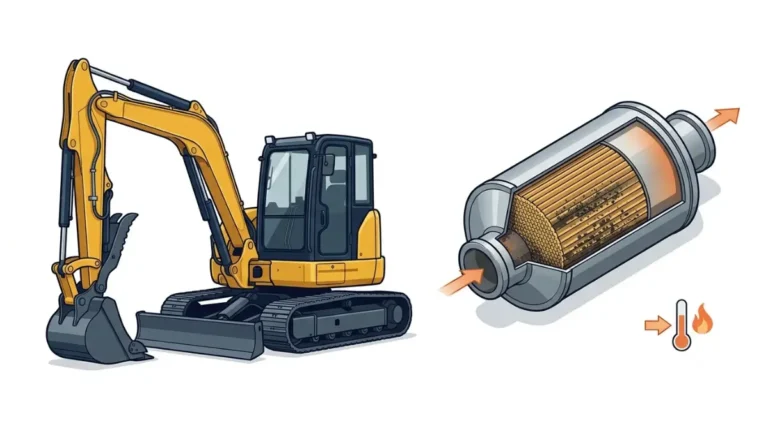
The engine’s EPA label shows which emissions tier it was certified to, and auction listings record it; the Volvo above carries a 2012 US EPA label. Its deficiency notes list an EATS (exhaust aftertreatment system) failure and an engine that won’t throttle up, both repairs to quote before bidding.
Ask the dealer’s service shop to confirm the DPF and SCR system is present and to read its fault history. How DPF regeneration works on Tier 4 excavators explains what those faults involve.
EPA’s Freedom to Fix guidance from February 2026 allows nonroad diesel emission controls to be disabled temporarily to make a repair, and nothing beyond that; a machine offered with its DPF or SCR system removed is outside it.
$4,125 of a big winning bid goes to the auction
At a US Ritchie Bros. sale, a $100,000 all-in ceiling allows a winning bid of $95,875. The published buyer fee schedule for US events opening on or after August 1, 2026 takes 10% of the winning bid up to $30,000, 5.5% up to $75,000 with a $3,000 minimum, and a flat fee above that, plus sales tax and a $125 documentation fee on titled items.
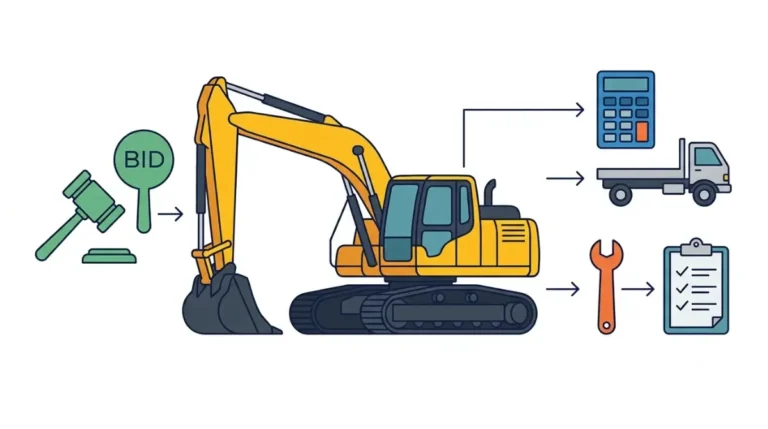
To set a maximum bid at any auction, work down from the ceiling, using that company’s own fee page:
- Start with your all-in ceiling, the most you will spend to own the machine.
- Subtract the written repair quotes for every measured finding.
- Take off the transport quote from the auction yard.
- Subtract the transaction fee for the bracket your bid lands in.
That middle-bracket minimum catches smaller machines: every winning bid from $30,000 to about $54,545 pays it, because 5.5% stays below it until then. On a $45,000 ceiling with nothing deducted for repairs or transport, that leaves a bid of $42,000.
Before you sign: Ritchie Bros. bids cannot be retracted, and live-auction machines sell as is, where is. Under the IronClad policy, a dispute claim filed without penalty goes in writing within 11 business days of the sale, or before a self-hauled machine leaves the yard if that comes first, and every settlement carries a $750 deductible. Ritchie Bros. makes the final call on each claim.
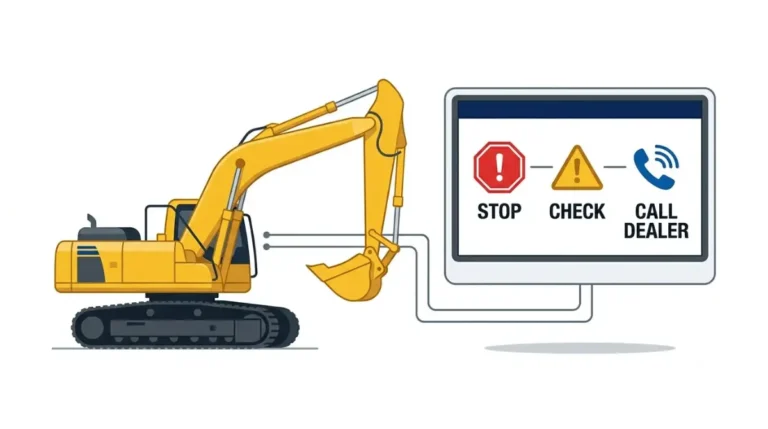
Book the measurement before viewing day ends
Get the undercarriage measured and the fluid sample drawn before viewing closes, with every finding in writing so it becomes a line in step 2. Cat’s used-excavator buying guidance treats inspections as expected and suggests looking elsewhere when a dealer resists one. If the hours are the only worry, where the high-hour line sits on a mid-size excavator covers that question.