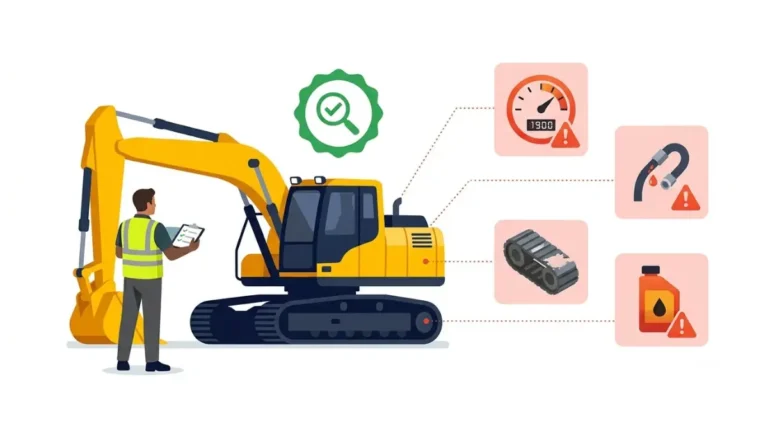
Cat 320 excavator problems by generation, 320D to 320 GC

A Cat 320 from the 320F L on can derate on a DEF fault; EPA’s 2025 guidance allows 36 hours at full power first, if Caterpillar releases an update.
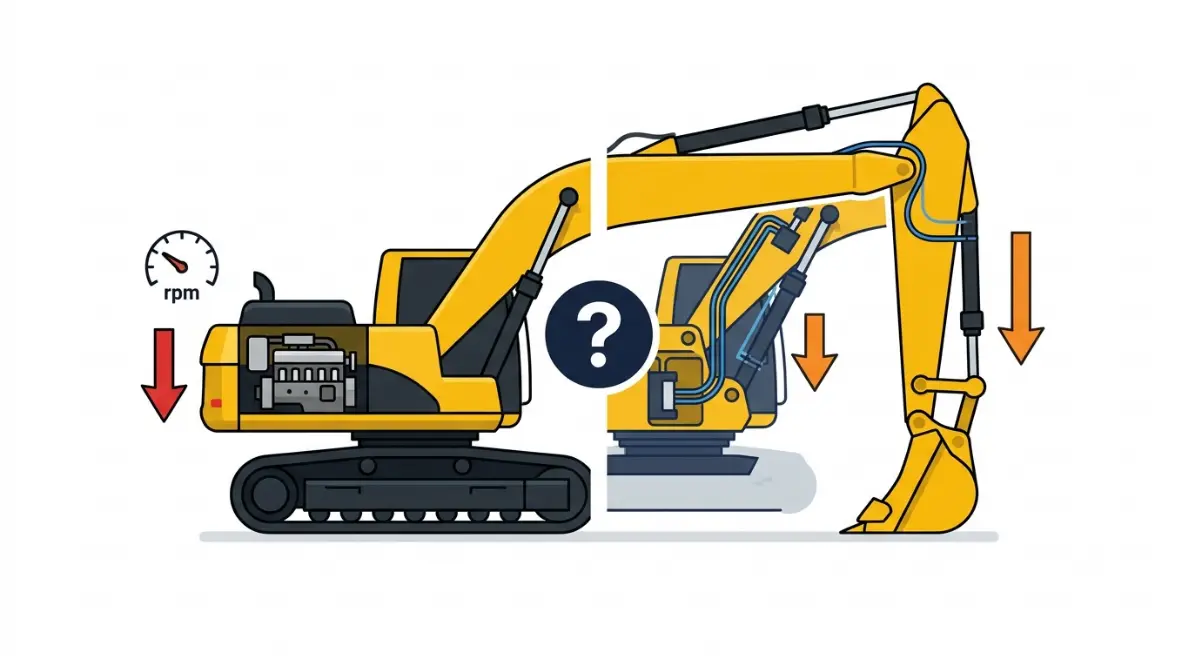
Table of Contents
Rates and sources checked on October 27, 2026.
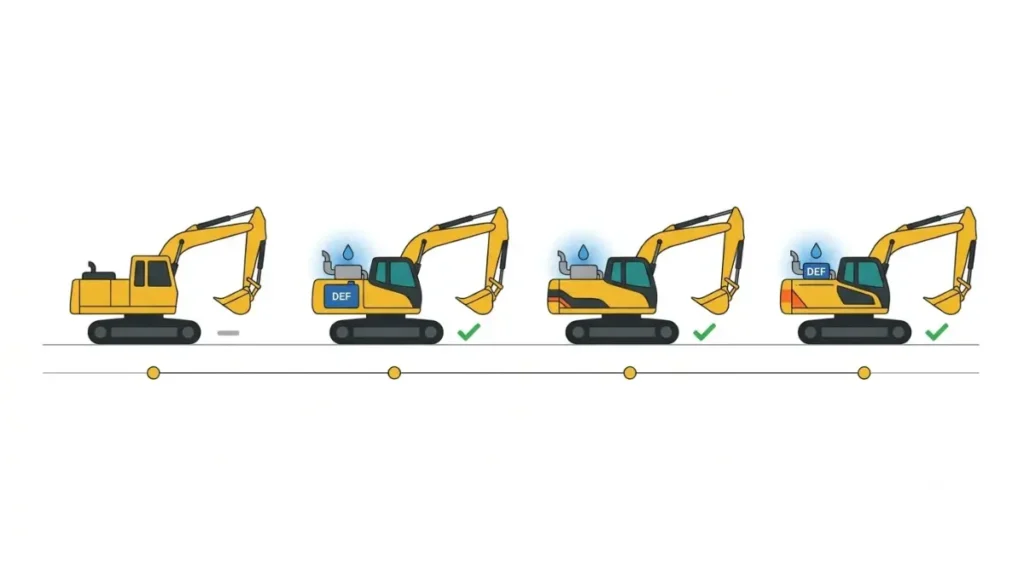
Which problems a Cat 320 can have depends on its generation. Every 320 from the 320F L onward carries a DEF tank and can cut engine power on an SCR fault, while Cat’s 320D brochure lists no DEF tank at all, so a DEF derate is off the list on a 320D.
Four Cat 320 generations and what each one carries
| Generation and Cat document | Engine, net power | Emissions standard Cat lists | DEF tank, US gal (L) | What it means for a power-loss warning |
|---|---|---|---|---|
| 320D / 320D L, brochure ASHQ5880 | C6.4 ACERT, 138 hp | Not stated in the brochure | None listed | No DEF system to fault |
| 320F L, dealer spec page | C4.4 ACERT, 161 hp | EPA Tier 4 Final, EU Stage IV | 5.5 (21) | DEF or SCR faults can derate |
| 320 Next Generation, build 07G | C4.4, 172 hp | EPA Tier 4 Final, EU Stage V | 10.3 (39) | Same DEF and SCR causes as the 320F L |
| 320 GC | C4.4, 146 hp | EPA Tier 4 Final, EU Stage V | 10.3 (39) | Same DEF and SCR causes as the 320F L |
Sources: Cat’s 320D/320D L brochure, Spanish edition; 320F L specifications at Peterson Cat; 320 specifications at Western States Cat; 320 GC specifications at Holt CAT. Your own manual and serial number govern.
The 320D arrived in 2007 and the Next Generation 320 in 2017, according to Caterpillar’s excavator history. The 320E was sold between them. Cat’s 320F L page describes the model it replaced as Tier 4 Interim. None of the Cat documents above lists a 320E’s exhaust aftertreatment, though. On a 320E, read that part of the operation and maintenance manual for your serial number before you chase a regeneration or DEF warning.
Is it the engine or the hydraulics?
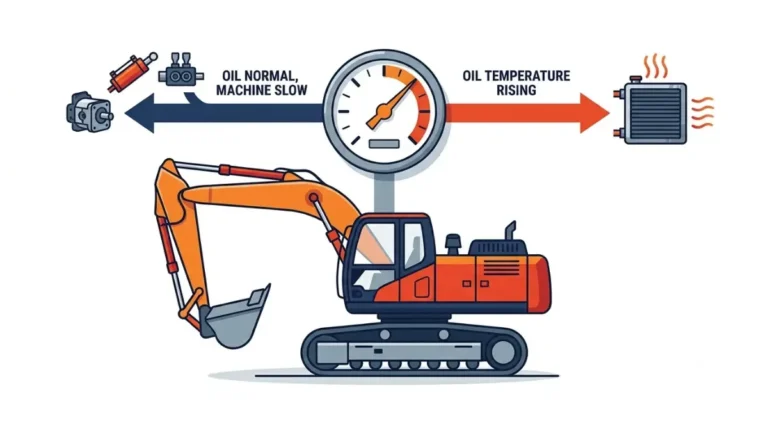
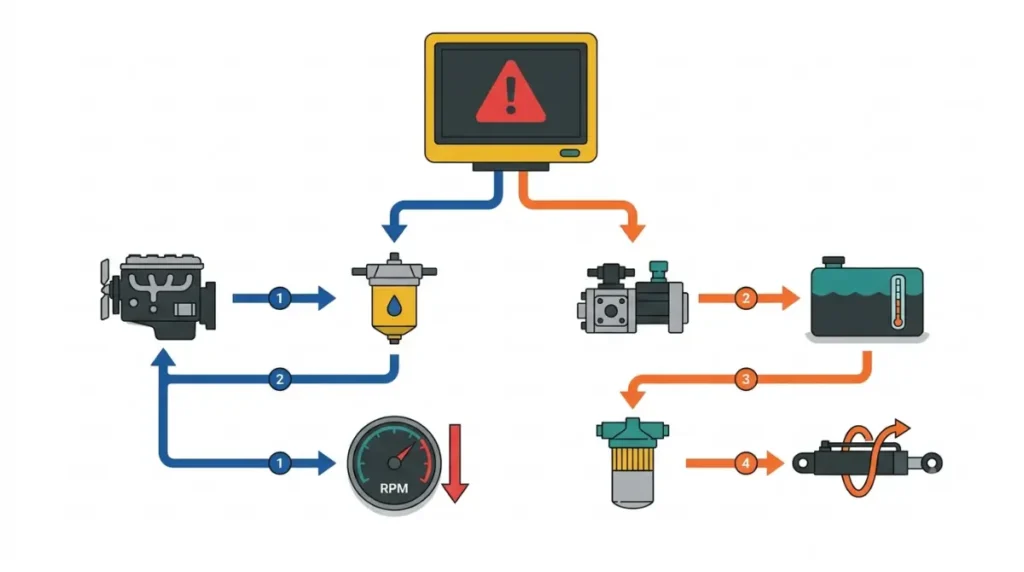
When a 320 bogs under a full bucket, the first thing to settle is whether engine speed drops. These four checks need no tools:
- Write down the hour meter reading and any code exactly as the monitor shows it. Note whether the trouble starts cold or only after warm-up. A guide to how Cat CID and FMI codes read explains what the numbers point to.
- Confirm the fuel. These C4.4 engines require ultra-low-sulfur diesel at 15 ppm sulfur or less. Then compare your fuel filter and water separator changes against the intervals in your manual.
- With the machine parked on level ground, the bucket down and the engine off, read the hydraulic oil level at the sight gauge.
- Load the machine again and watch engine speed. Tell the dealer whether the engine pulled down, or whether it held while the front functions slowed.
On a connected Next Gen 320, Remote Troubleshoot lets the dealer test the machine without a site visit. If the trouble only shows up once the oil is hot, the slow-when-hot pattern on excavators covers the general causes.
Hazard: Hydraulic oil escaping a pinhole under pressure can be injected through skin. Never feel along a hose for a leak. Pressure tests, relief valve settings and hose replacement belong to a dealer technician with gauges and Cat’s service software.
320F L and newer machines that derate on DEF faults
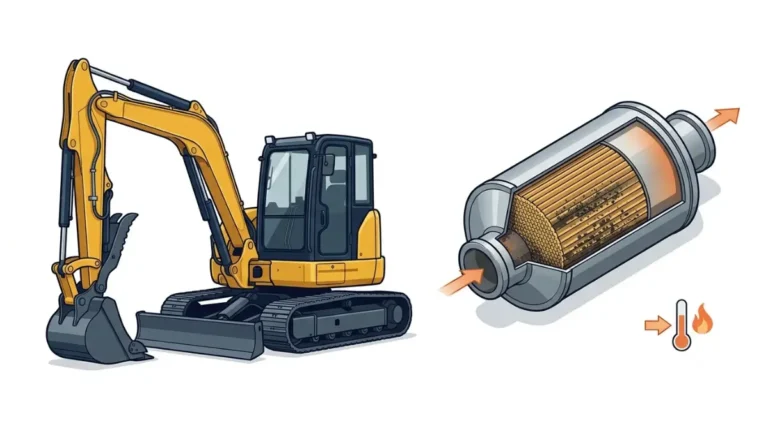
SCR (selective catalytic reduction) cuts nitrogen oxides by injecting DEF into the exhaust. When a sensor fails, the engine control module can start an automatic derate.
What to check first on a DEF warning
Check the DEF level on the monitor and confirm the fuel as above. The 320 GC’s Clean Emissions Module has no required maintenance, so there is no owner service step on that module to try.
The current 320’s aftertreatment is designed to need no operator input or downtime, so repeated regeneration or DEF messages on that machine go to the dealer. The guide to how regeneration works and fails across brands covers the general picture.
EPA guidance on derate timing
In August 2025, EPA urged engine and equipment makers to revise their DEF software. Under the new timing, a nonroad machine runs 36 hours with no performance cut after an inducement begins. After that, it can restart at full power three times for up to 30 minutes each (EPA DEF guidance fact sheet; EPA letter to manufacturers).
In March 2026, EPA added sensor guidance encouraging more reliable DEF monitoring, including NOx sensors. Caterpillar’s construction press-release page lists no DEF inducement update for its excavators.
Note: The longer timing reaches a 320 only if Caterpillar releases an update covering its serial number.
EPA’s enforcement alert on defeat devices and tampering warns that installing a defeat device or tampering with nonroad equipment can bring enforcement action and penalties.
Records to get before you buy a used 320
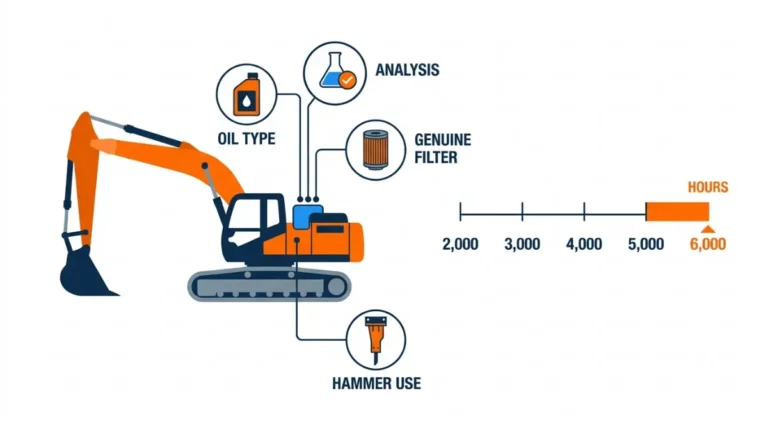
Start with the service file before the hour meter. On the Next Gen 320 and the 320 GC, the 1,000-hour engine oil interval holds only with Cat oil, Cat filters and regular S·O·S fluid sampling. A seller running that interval should be able to hand over the S·O·S reports. The hydraulic oil filter on those machines has a 3,000-hour replacement interval.
On a 320F L or newer, the DEF tank and its lines belong on the inspection list, along with any DEF or SCR events in the machine’s log. For the money side, the guides to used prices by hours for this size class and owning and rental costs by excavator size cover what a machine should cost against its hours.
Call the Cat dealer with these five details
Five details shorten the call:
- Serial number and generation from the table above
- Hour meter reading
- The code as the monitor shows it
- Whether the trouble starts cold or warm
- The checks already done
Ask whether Caterpillar has released any software update for that serial number, DEF inducement changes included. On a connected current 320, Remote Flash loads updates without a technician on site.