Clear Steps for a Contractor to Raise Equipment Rates

Raising contractor equipment rates starts with two buckets: ownership cost that runs while a machine sits, and operating cost that rises with hours.
Table of Contents
Scope: Owned construction and farm equipment (skid steers, excavators, backhoes, loaders, utility tractors) billed hourly, daily, or monthly by US owner-operators and small contractors. Guidance is model-agnostic; cost inputs differ between pre-Tier 4 and Tier 4 Final machines.
Why your equipment rate quietly falls behind
A rate set once and never rebuilt drifts below your cost per hour without anyone noticing. If you haven’t changed yours in a year, start here.
If a customer just asked for a break, jump to notice and pushback. If you just bought a skid steer, build the cost floor before you quote.
Your own costs, not headlines, justify an increase; the equipment rates per hour by machine guide compares benchmarks by class.
Who this fits
Owner-operators, contractors, and farmers billing machine time.
What “rate” means
Machine only, operator excluded.
💵 About These Numbers: No market prices are cited. FEMA’s 2025 schedule applies to disasters declared on or after July 1, 2025. Rates vary by region, hours, machine age, and operator inclusion.
Start with your real cost per hour, not the market rate
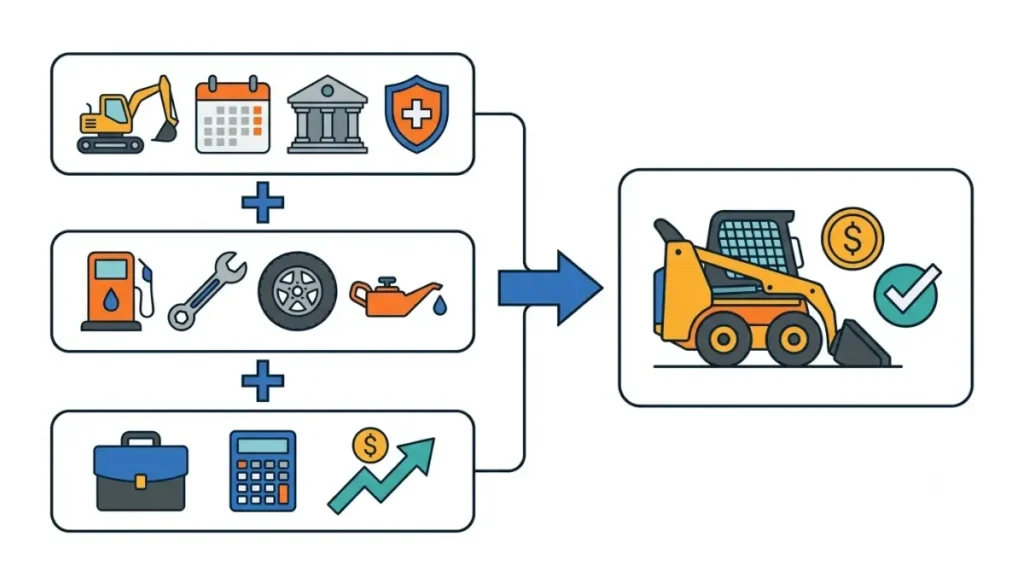
Your cost per hour is the floor under any rate.
- Add yearly ownership cost: depreciation, taxes, interest, insurance, housing.
- Divide by the hours you realistically bill.
- Add hourly operating cost: repairs, fuel, lubricants, tires or tracks.
- Add overhead and margin: your floor.
Ownership costs: the ones that run whether the machine works or not
They accrue on an idle machine; see Iowa State’s farm machinery cost guide and our owning vs. operating math.
Operating costs: the ones that rise with hours
Tier 4 Interim and Final machines often add filter or exhaust-fluid service; pre-Tier 4 machines do not. Your operator’s manual and serial range govern intervals.
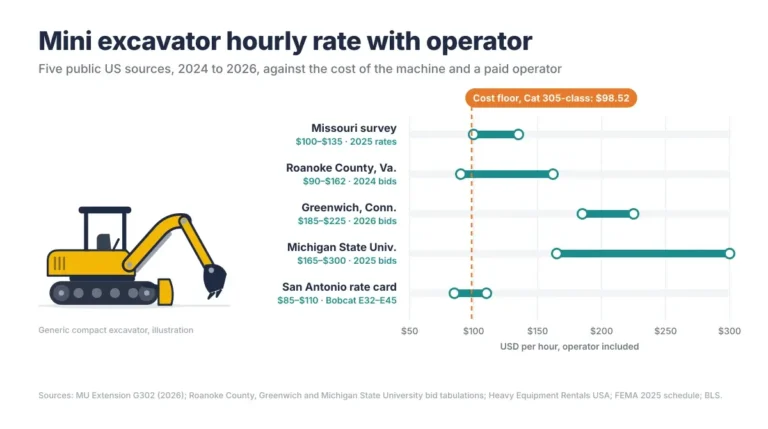
Your cost floor
At 300 billed hours a year, ownership cost per hour is triple that at 900; run yours through the Equipment Cost-Per-Hour Calculator.
What’s inside the benchmark rate you’re comparing to
Public benchmark rates cover different costs, so compare like for like.
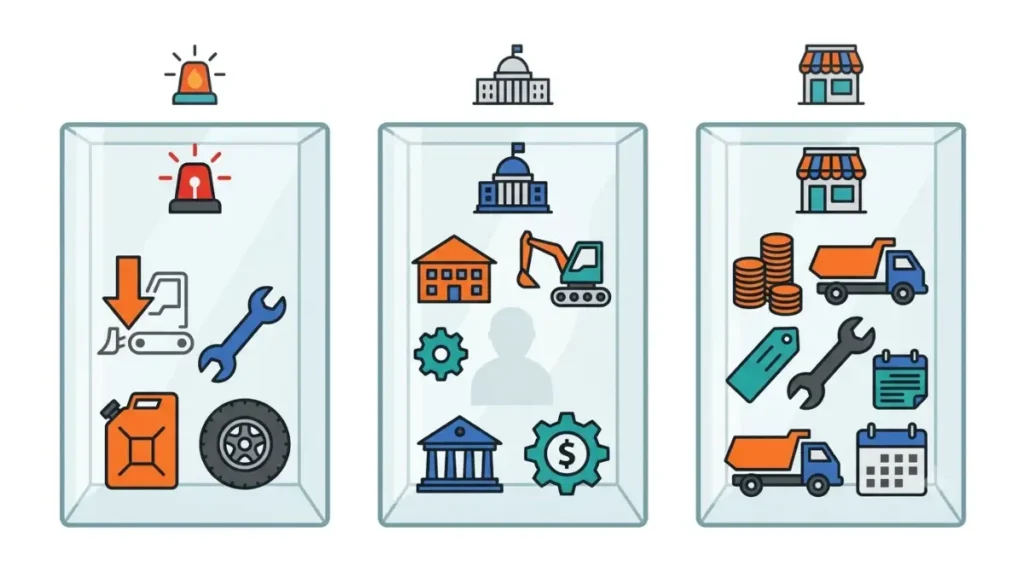
| Benchmark | Built for | Includes | Leaves out | What it means |
|---|---|---|---|---|
| FEMA schedule | Disaster reimbursement | Depreciation, overhead, upkeep, fuel, tires | Operator, standby | Machine-only reference |
| Corps EP 1110-1-8 | Federal contract pricing | Average ownership, operating cost | Idle time (standby allowance) | If your contract names it |
| Retail rental guides | Market pricing | Advertised distributor averages | Your cost structure | The market, not your floor |
Sources: FEMA (2025); FAR 31.105; Cohen Seglias; Equipment World. Compiled October 10, 2026; no tables reproduced.
FEMA: what it covers
Corps schedule: when it’s used
Agencies may specify a schedule when actual costs can’t be determined; see standby billing.
Retail guides: what they average
Confirm the provider’s method first.
Set the new number between your cost floor and the market
Your new rate sits above your cost floor and inside what customers will pay.
Where your cost floor and the market meet
Cover cost plus margin, then check FEMA’s machine-only figures and local rates. If you already clear that, don’t raise because others did.
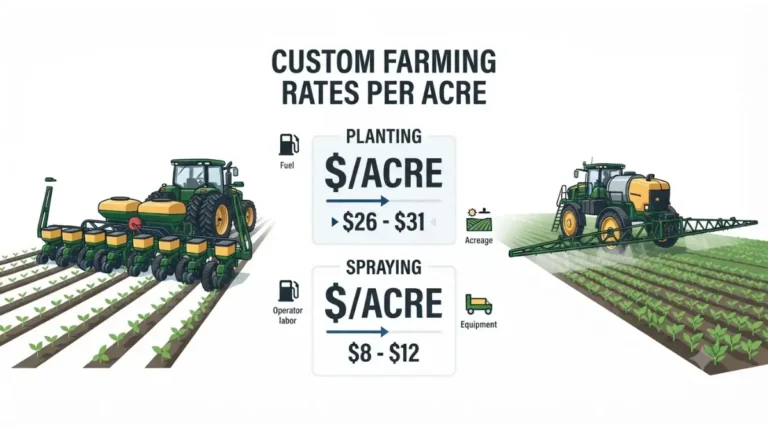
Using a custom rate survey
Iowa State’s custom rate survey is a starting point, not a price list; your rate must still cover your costs. Its 2024 release counted fuel and labor, so check what survey rates include.
When fuel moves, what actually changes
Multiply hourly fuel burn by the change in fuel price, as Iowa State does per acre.
Tell customers before the new rate starts
Dated written notice, before the first invoice at the new rate, does most of the work.
- Pick an effective date.
- Tell your biggest customers first.
- Send written notice.
- Quote new work at the new rate.
Who to tell first, and how
Largest customers first, in person or by phone.
What the notice must say
✅ Do This: Send this: “Effective [date], our rate for [machine] moves from $[old] to $[new] per hour. Work completed before [date] is billed at the current rate.”
How much lead time
SCORE’s guide suggests 30 to 60 days’ written notice; ACCA suggests letting customers order at current prices first. Check your rental agreement’s terms; this isn’t legal advice.
Hold the line when a customer pushes back
Decide your answer before your best customer objects.
Offer a window, not a discount
Offer a short window at the old rate for work committed now, with a hard end date. A permanent discount tells everyone the notice was an opening bid.
When a customer leaves
Check the lost job against your cost floor: if the old rate didn’t cover cost plus margin, the machine is better used elsewhere.
Three mistakes that make a rate increase backfire
Three errors undo most increases.
Raising rates on a rarely used machine
A higher rate doesn’t fix low use; if the machine mostly sits, sell it or find it more work.
Basing the increase on market swings alone
ACCA’s contractor blog cautions that customers may expect cuts when the market eases. Tie increases to your own costs.
Surprising the customer with no notice
Unannounced increases turn loyal customers into negotiators; give dated notice.
Frequently asked questions
1. How do I calculate cost per hour?
Add yearly ownership cost, divide by realistic billed hours, then add operating cost, overhead, and margin.
2. What does the FEMA rate include?
FEMA’s machine-only rate covers depreciation, overhead, upkeep, fuel, lubricants, and tires, but not operator labor or standby.
3. What is a standby rate?
A standby rate is the lower charge for equipment idled on a job; the Corps schedule treats it separately.
4. How much should I raise my rate?
Raise it enough to cover your cost floor plus margin, then check it against local market rates.
5. Can I use a custom rate survey?
Use Iowa State’s survey as a starting point; your rate should still cover your own costs.
6. Should fuel prices change my rate?
Multiply hourly fuel burn by the change in fuel price to see your added cost per hour.
7. How much notice should I give?
SCORE’s guide suggests 30 to 60 days’ written notice; check your rental agreement for longer terms.
8. Do existing customers pay the new rate immediately?
No: give them dated written notice, and consider letting them order at current prices until then.
9. How do I justify a rate increase?
Point to your own cost per hour, not market headlines; ACCA warns market-based justifications invite expectations of cuts.
10. Will I lose customers?
Some may; check each lost job against your cost floor, since a rate below cost wasn’t paying for the machine.
What to do this week
Build your cost floor in the Equipment Cost-Per-Hour Calculator, check what each benchmark includes, set the rate, then give your biggest customer dated written notice first.