Equipment work: contractor rate vs homeowner rate

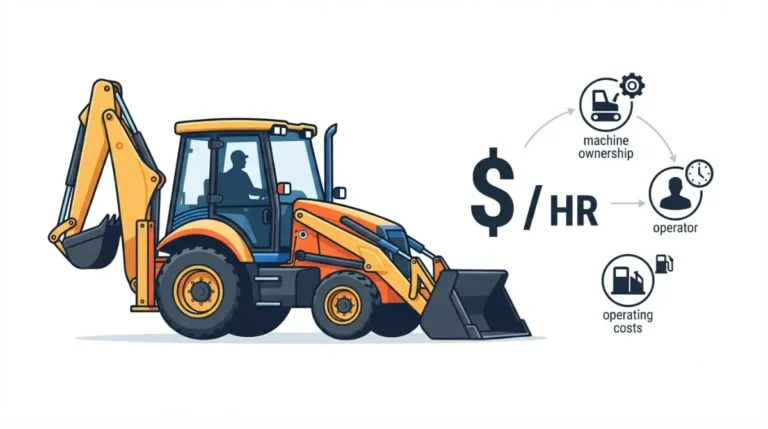
Homeowner or contractor, one machine gets one hourly rate. Four Virginia bids of $85–$125/hr for one backhoe class show the gap sits between sellers.
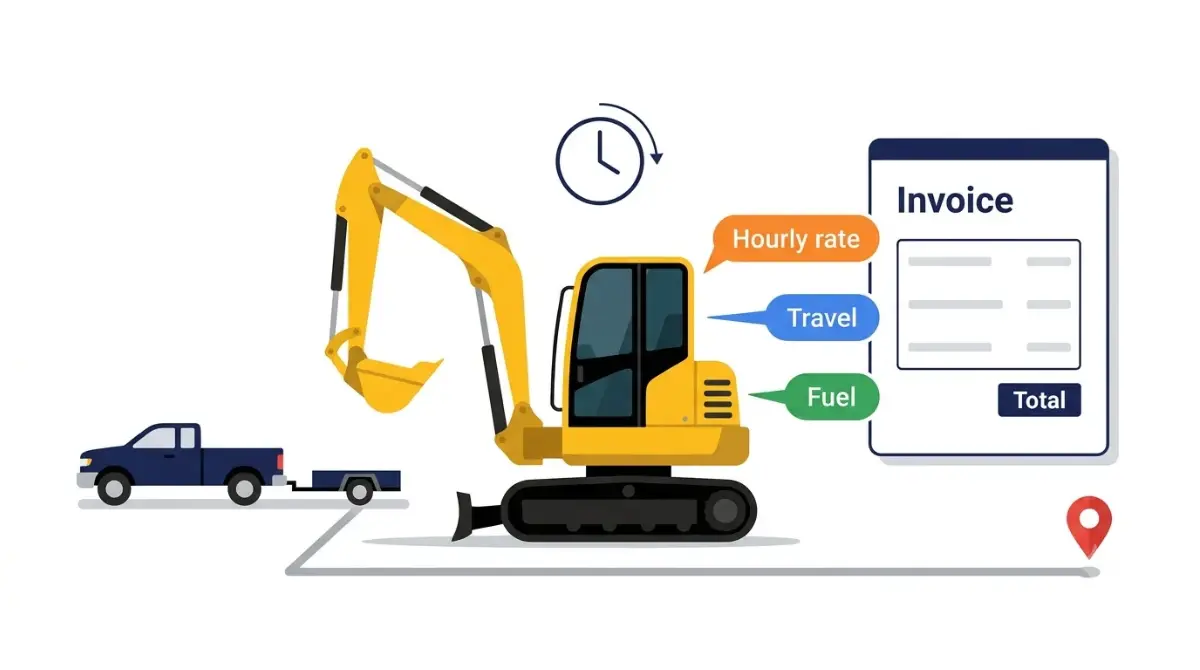
Table of Contents
Rates and sources checked on October 23, 2026.
One machine gets one hourly rate, whoever books it. Where two quotes for the same machine differ, the gap follows the job (how long it runs, how far the machine travels, when the bill gets paid), and each of those belongs on its own line next to that rate.
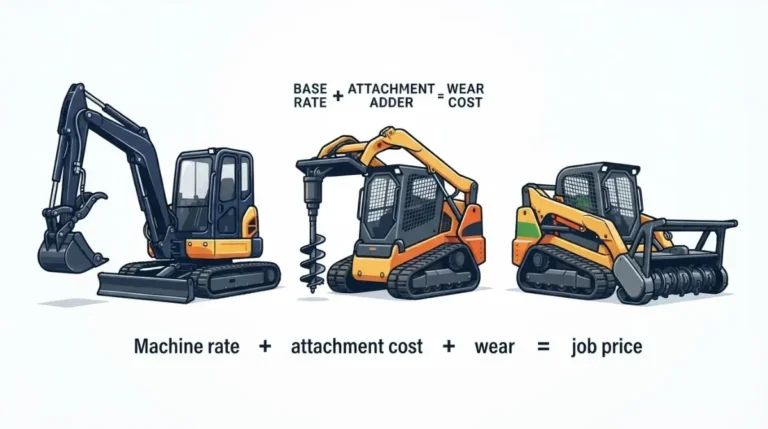
The sources that publish equipment rates price by machine and task. Iowa State’s 2026 custom rate survey and the county bid sheet below carry no separate homeowner rate. The base rate itself comes from your own costs, worked out in equipment hourly rates by machine.
Four bids for the same machines and buyer
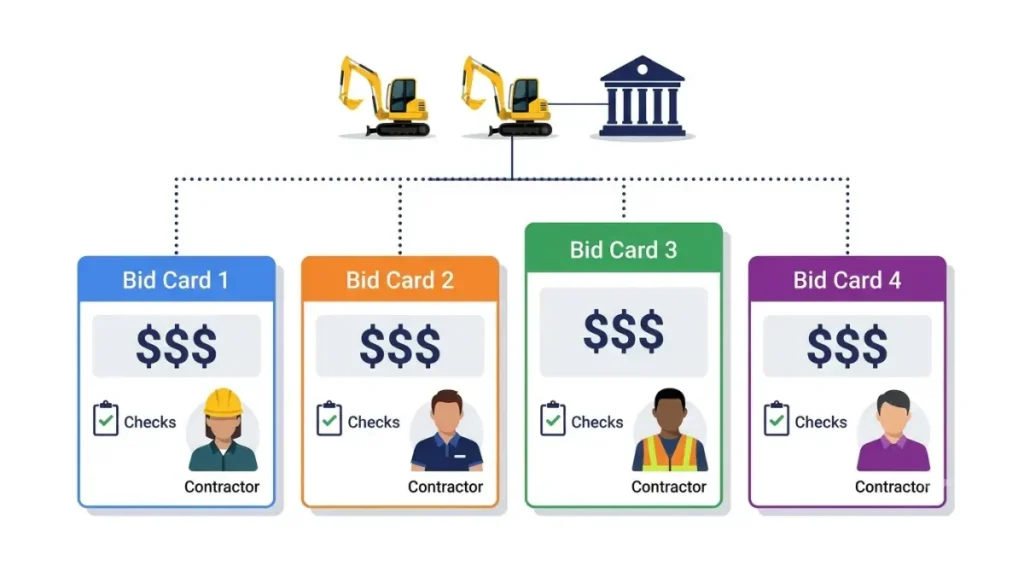
In August 2024, Roanoke County, Virginia, opened hourly bids for on-call work with an operator. The first four bidders on the county’s posted bid tabulation priced three machine classes like this:
| Machine with operator (Roanoke County, VA, IFB #2025-008, opened Aug 20, 2024, USD per hour) | Lowest bid | Highest bid | Median of four bids | Highest ÷ lowest |
|---|---|---|---|---|
| Backhoe loader, Cat 416-class | $85.00 | $125.00 | $101.25 | 1.5× |
| Mini excavator, Cat 308-class | $90.00 | $162.00 | $112.50 | 1.8× |
| Skid steer loader with attachments | $75.00 | $110.00 | $106.25 | 1.5× |
Source: Roanoke County IFB #2025-008 bid tabulation. Medians and ratios worked from the four bids shown.
The buyer, the paperwork and the county roads were identical for every bidder. The mini excavator row still shows the widest gap.
The tabulation doesn’t record why the bids differ. It does take the customer out of the explanation, because every column priced work for one county.
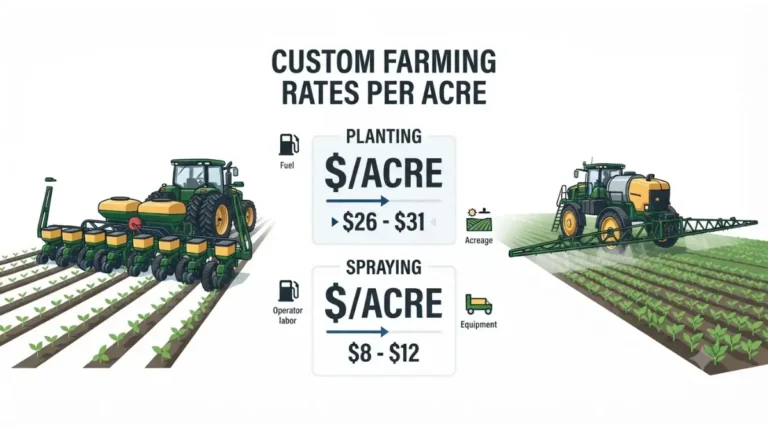
A statewide market shows the same pattern. Backhoe work with operator and fuel runs $70 to $200 an hour across Iowa in the 2026 survey, after the single highest and lowest responses are dropped. Nearly half the people who answered both hire and perform custom work, and the survey reports rates by task, never by who pays.
Why a two-hour job earns less per hour
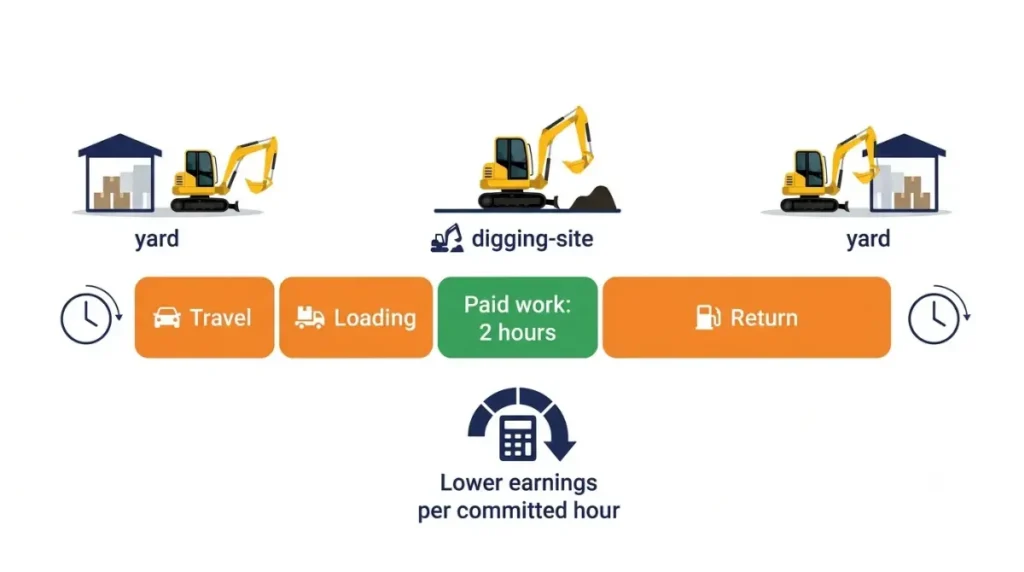
Take that survey’s median for backhoe work, $130 an hour, and assume 1.5 hours per job never reach the invoice: the drive out, loading, unloading and the drive back. The 1.5 hours is an illustration, so swap in your own figure.
| Billed hours (Iowa 2026 median, USD; 1.5 unbilled hours assumed) | Billed revenue | Hours committed to the job | Earned per committed hour |
|---|---|---|---|
| 2 | $260 | 3.5 | $74 |
| 4 | $520 | 5.5 | $95 |
| 8 | $1,040 | 9.5 | $109 |
| 16 (two days, one move) | $2,080 | 17.5 | $119 |
Rate input: Iowa State Extension, 2026 Iowa Farm Custom Rate Survey, backhoeing median. Earned per committed hour = billed revenue ÷ (billed hours + 1.5), rounded to the dollar.
The two-hour job earns about 38% less for each hour the backhoe and operator are tied up than the two-day job does. The customer appears nowhere in that arithmetic.
Add a travel line that bills the 1.5 hours at the median rate, $195 per job, and every row earns the full rate for its committed hours. A higher hourly rate for homeowners would recover that time only on homeowner jobs, while a contractor’s two-hour call carries the same unbilled hours.
Can you legally charge homeowners more?
The federal price-discrimination law, the Robinson-Patman Act, is written around sales of goods. The FTC’s guidance on Robinson-Patman price discrimination says the Act “applies to commodities, but not to services, and to purchases, but not to leases.” It also names price differences justified by the seller’s own costs as a defense, with volume discounts as its example.
Operated hourly work is a service, and a bare machine rental is a lease. How that bears on your pricing is a question for a business attorney licensed in your state: ask whether your state has its own price-discrimination statute and whether it reaches equipment services or rentals.
Setting rates together with other operators is a separate antitrust question, covered in whether sharing prices with competitors is illegal.
When a contractor discount holds up
A lower rate is easiest to defend when it follows volume. United Rentals’ pricing terms for its 2020–2024 cooperative purchasing contract said the company keeps no published list rate and sets account prices partly from the customer’s anticipated rental spend.
A contractor who keeps your machine busy for weeks spreads one move across many billed hours. One who books a single afternoon costs you what a homeowner’s afternoon does.
Write any discount down with the condition that earns it, such as guaranteed hours or payment within an agreed number of days, so it applies the same way to anyone who meets it.
Before you sign: Ask a business attorney whether your discount and deposit terms are enforceable as written in your state before they go into a customer contract.
A homeowner quote, line by line
If two quotes for the same dig look far apart, ask each contractor to break the price into lines:
- whether the hourly rate is operated and wet (operator and fuel included) or covers the machine alone
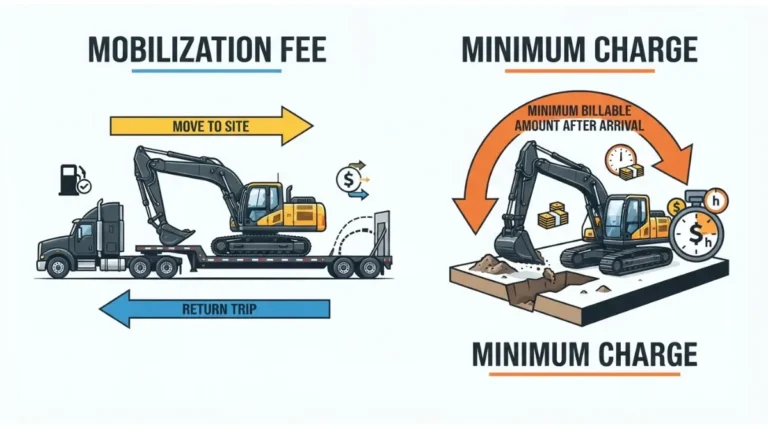
- the mobilization fee and minimum charge, and whether one already includes the other
- the deposit, and when the balance is due
- how the price changes if diesel or the scope of work changes
Once both quotes are in lines, compare the totals for the hours you expect the job to take.
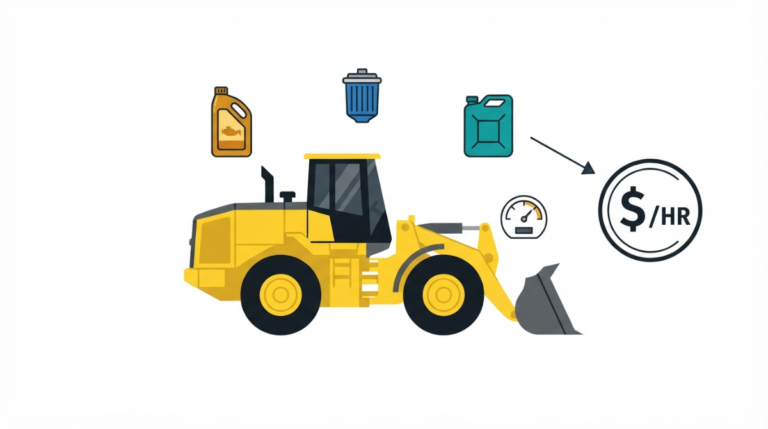
Fuel is the line most likely to move this season. Iowa farm diesel averaged $5.50 a gallon in September in USDA’s Iowa production cost report, against $2.89 assumed when the 2026 survey went out in February. Iowa State estimated custom rates could run 7% to 17% above the survey, depending on how much fuel the work burns.
Those are estimates for farm work. How a fuel clause is written for rental and contract equipment work is covered in fuel surcharges for equipment rental and work.
Before you quote: Print the diesel price your rate assumes on the quote itself, so any later fuel adjustment starts from a stated number.
Add a travel line to your next small-job quote
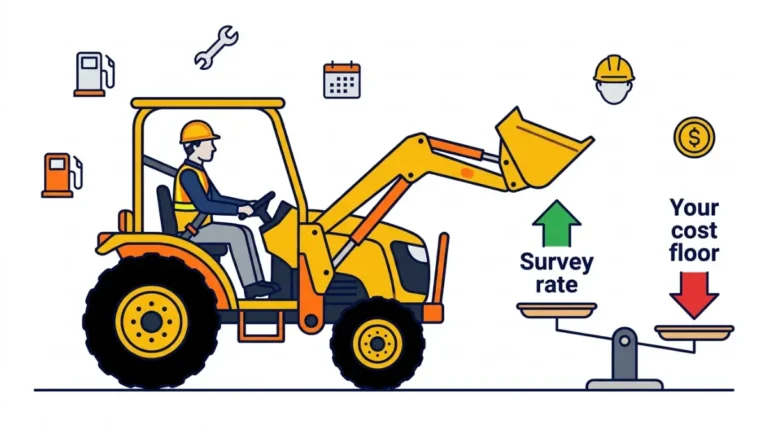
Before the next two-hour call, count the hours it will keep you away from the yard without billing, and price them as their own line at your base rate. That base rate comes from your owning and operating cost per hour, which is the floor below which any job loses money. A contractor who books the same two hours gets the same travel line on the quote.