The Right Mini Excavator Maintenance Schedule for Your Brand

Mini excavator service intervals aren’t universal: two Kubota U35-4 manual editions put engine oil at 250 or 500 hours. Which one is yours?
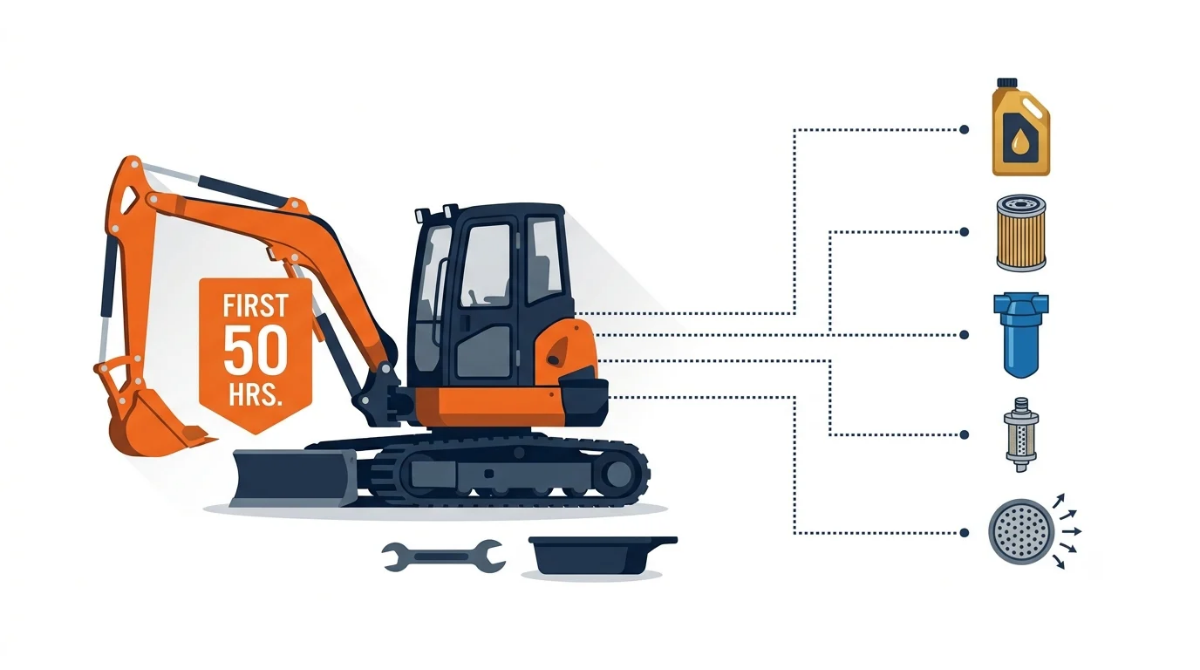
Table of Contents
Mini excavator maintenance schedule: what your hour meter sets
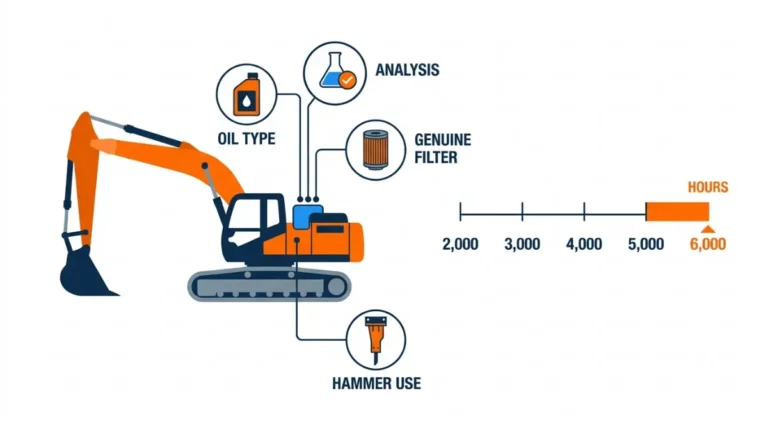
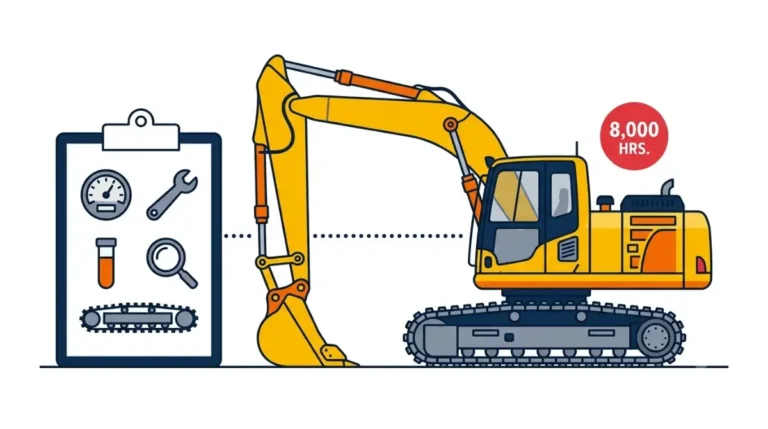
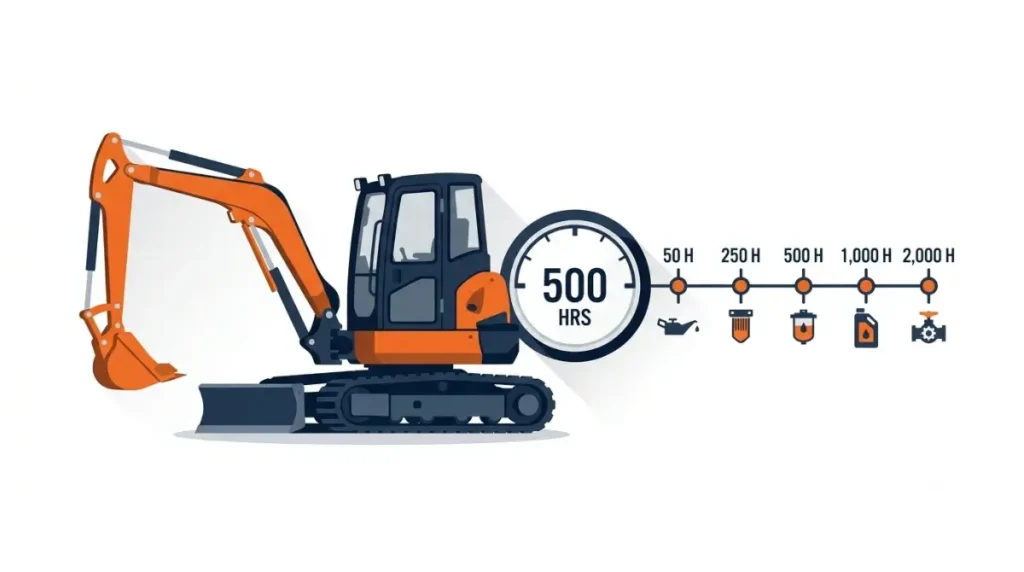
This guide covers tracked mini excavators of about 1–6 metric tons with Tier 4-era engines: the Bobcat E32–E55, Kubota U35-4, Deere 35G and Cat 301.5–302 CR. Each mini excavator maintenance schedule runs on the hour meter: 10-hour checks, a first service at 50 hours, then 250, 500, 1,000 and 2,000 hours.
The milestones every schedule uses
The checkpoints match across brands; what falls at each one doesn’t, so your manual and serial range govern every number here. Service is part of what each excavator size costs to own and run.
Find your section
- New machine near 50 hours: read the break-in service.
- Running a fleet: jump to the brand table.
- Under 250 hours a year: read the calendar rule.
ℹ️ Safety Note: Service with the boom, bucket and blade fully lowered and the engine off, and let oil cool before draining, as Kubota’s manual directs. Hydraulic lines can stay pressurized after shutdown; follow your manual and leave that work to a qualified technician.
📋 Compliance Note: OSHA 29 CFR 1926.600 (1979, amended 2010) requires construction employers to keep buckets and blades lowered or blocked during repair. State-plan states may add rules.
Daily and 50-hour checks before you start the engine
Most scheduled work on a mini excavator happens before the key turns.
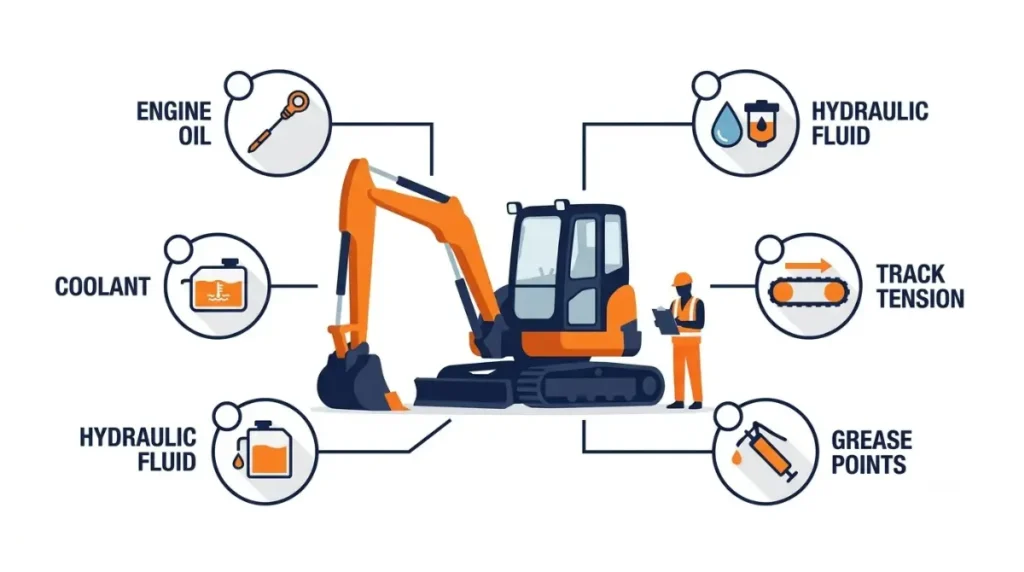
The 10-hour walkaround
Bobcat’s E32–E55 schedule lists these every 10 hours:
- Engine oil, coolant (cold) and hydraulic fluid levels
- Water drained from the fuel filter
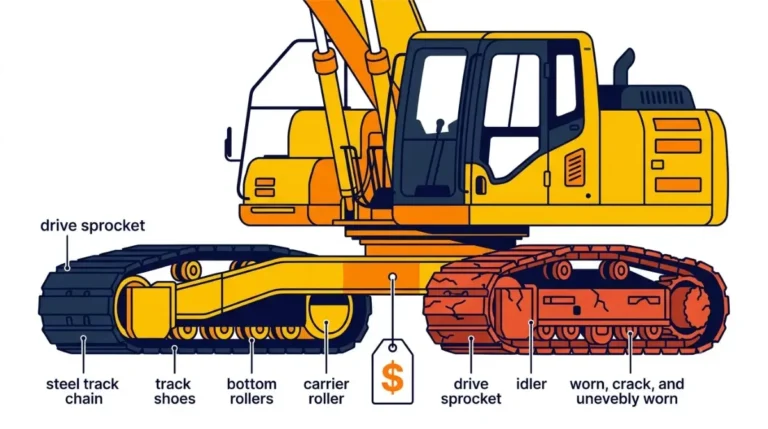
- Track tension and pivot-point grease
- Seat belt, console lockout and motion alarm
Swing bearing grease and other 50-hour items
Every 50 hours, Bobcat adds swing bearing grease, a battery check and a fuel tank drain, moving the swing bearing to every 10 hours in water. Cat lists 100 hours for the slew ring on its 1–2 ton minis.
✅ Do This: Match your machine’s service decal to your serial range before trusting any chart, this one included.
The first 50-hour service: what changes and why
The first scheduled service comes early, and its contents vary by maker.
What Bobcat and Kubota change at 50 hours
- Bobcat E32–E55: engine oil and filter, hydraulic and case drain filters, and the reservoir breather cap.
- Kubota U35-4: first engine oil and filter, plus the first travel motor oil, which then runs every 500 hours or yearly.
Why Deere’s first filter change comes at 250
Deere’s 35G manual sets the first hydraulic tank filter change at 250 hours, then every 500. Following another brand’s chart can skip a first service your machine needs.
250 and 500-hour services: engine oil, fuel and filters
Engine oil is where the makers split hardest.
Engine oil: 250 or 500 hours, depending on the maker
- Bobcat, Deere 35G and Cat 1–2 ton minis: 500 hours, with a 12-month limit on Bobcat’s E32–E55 service schedule.
- Kubota U35-4: one manual edition says 250 hours and yearly; another says 500, or yearly under 500.
⚠️ Watch Out: No manual for a used U35-4? Ask a Kubota dealer which edition fits your serial number before setting the oil interval.
Fuel and hydraulic filters at 400–500 hours
Bobcat, Kubota and Deere replace the fuel filter at 500 hours; Cat’s 1–2 ton minis use 400. All four change the hydraulic filter at 500.
1,000 and 2,000-hour services: hydraulic oil and valves
The long intervals change the hydraulic oil itself, not just its filter.
Hydraulic oil, suction strainer and pilot filter
Bobcat and Kubota’s U35-4 change hydraulic oil at 1,000 hours, Kubota with its pilot and tank suction filters; Deere’s 35G waits until 2,000. Use only fluid meeting your manual’s spec, and if the machine slows when warm, see why hydraulics slow down when the oil gets hot.
Valve clearance, travel motor oil and coolant
Bobcat and Deere check valve clearance at 1,000 hours, when Bobcat also replaces travel motor fluid. Coolant runs 24 months on Bobcat and 6,000 hours on Cat’s 1–2 ton minis.
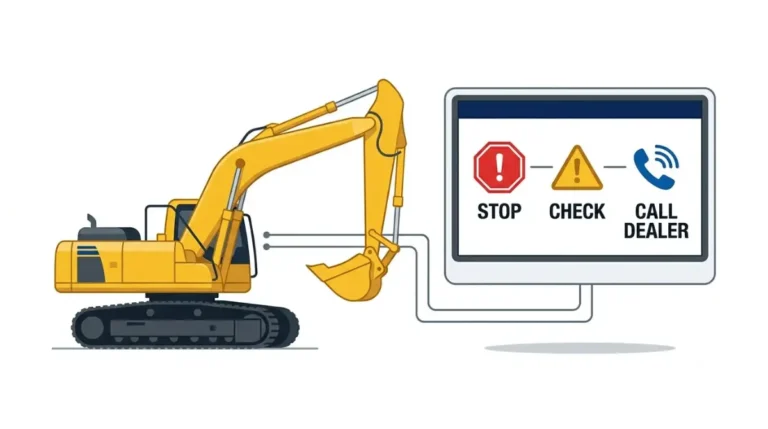
🔧 Stop Here: Valve adjustment needs engine specs and gauges. Book a dealer service department, and have them confirm your fluid spec on the same visit.
Kubota vs Bobcat vs Deere vs Cat: where intervals differ
Hydraulic oil runs 1,000 to 3,000 hours depending on the maker, and engine oil 250 to 500.
Four makers, four intervals
| Machine | Engine oil | Hydraulic filter | Hydraulic oil | What it means |
|---|---|---|---|---|
| Bobcat E32–E55 | 500 h / 12 mo | 500 h (first at 50) | 1,000 h / 12 mo | Calendar limits apply |
| Kubota U35-4 | 250 or 500 h | 500 h (first at 250) | 1,000 h | Check your edition |
| Deere 35G | 500 h | 500 h (first at 250) | 2,000 h | Longest hours-only |
| Cat 301.5–302 CR | 500 h | 500 h | Up to 3,000 h | These models only |
Sources: Bobcat E32–E55 Tier 4 schedule; two Kubota U35-4 manual editions; Deere 35G manual (PIN 1FF035GX__K270001 and up); Cat’s 1–2 ton service walkthrough. Method: one reference document per maker, read October 2026, each interval recorded as stated.
Why a generic chart can be wrong for your machine
A widely ranking 2026 schedule presents 250-hour engine oil and 2,000-hour hydraulic oil as typical across makers; none of these four documents matches both. Cat’s figures come from Cat’s service walkthrough for its 1–2 ton minis and cover only the 301.5 to 302 CR.
When to service sooner, and how to service safely
Hours aren’t the only clock.
Low hours still need yearly service
Bobcat’s 250-, 500- and 1,000-hour items carry a 12-month limit, and Kubota calls for U35-4 engine oil at least yearly. At 100 hours a year, oil still changes annually.
Water, breakers and a lowered boom
Kubota’s U35-4 manual shortens hydraulic oil and return filter intervals for hammer work. OSHA’s equipment standard for construction requires buckets and blades lowered or blocked during repair. Buying used? Start by checking service records before you bid.
🔧 Stop Here: Work under a raised boom or on hydraulic lines belongs to a qualified equipment technician.
Mini excavator service schedule: common questions
1. What is the 50-hour service on a mini excavator?
Bobcat’s E32–E55 50-hour mini excavator service replaces engine oil and filter, hydraulic and case drain filters, and the breather cap.
2. How often do you change engine oil in a mini excavator?
Mini excavator engine oil runs 500 hours on Bobcat, Deere 35G and Cat 1–2 ton models; Kubota U35-4 editions say 250 or 500.
3. How often should hydraulic oil be changed on a mini excavator?
Mini excavator hydraulic oil changes at 1,000 hours on Bobcat and Kubota U35-4, 2,000 on Deere 35G, up to 3,000 on Cat 1–2 ton minis.
4. How often do you change the hydraulic filter?
Every 500 hours on all four mini excavators here; Kubota U35-4 and Deere 35G make the first hydraulic filter change at 250.
5. How often should you grease the swing bearing?
Bobcat greases the mini excavator swing bearing every 50 hours, or every 10 in water; Cat’s 1–2 ton minis use 100.
6. What should you check daily on a mini excavator?
Daily mini excavator checks: engine oil, coolant and hydraulic levels, fuel filter water, track tension, pivot grease and the seat belt.
7. Do low-hour mini excavators still need annual service?
Yes. Bobcat’s mini excavator intervals carry a 12-month limit, and Kubota’s U35-4 manual calls for yearly engine oil.
8. When should mini excavator coolant be replaced?
Bobcat replaces mini excavator coolant every 24 months; Cat lists 6,000 hours for its 1–2 ton minis.
9. Does a breaker change the mini excavator service schedule?
On a Kubota U35-4, yes: its manual shortens hydraulic oil and return filter intervals for mini excavator hammer work.
10. Can I do the 500-hour mini excavator service myself?
The 500-hour mini excavator service is mainly oil and filter changes; valve clearance at 1,000 hours belongs with a dealer. Have a qualified technician handle any work under a raised boom.
Your next step: log your hours against your manual
Find your service decal, match your brand’s row in the table, and log each service with its hour reading. Then work out what those services cost per hour, or whether a used mini excavator pays off on side work.