How Many Hours Is Too Many for a Mid-Size Excavator?

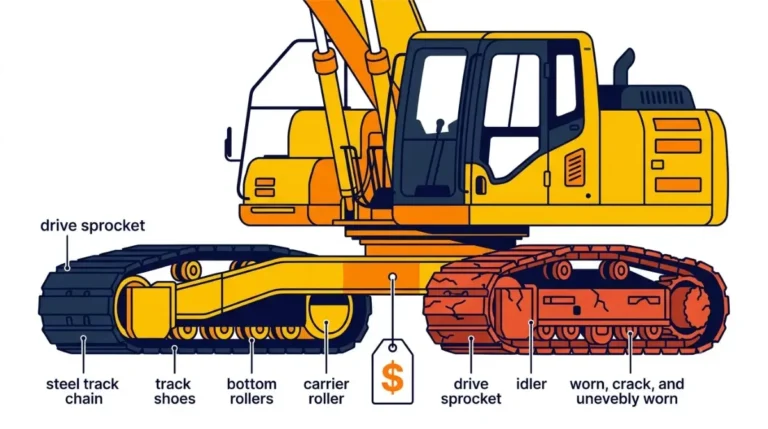
Mid-size excavator hours count use, not wear. Cat says undercarriage typically averages 50% of owning and operating cost; measure it before you bid.
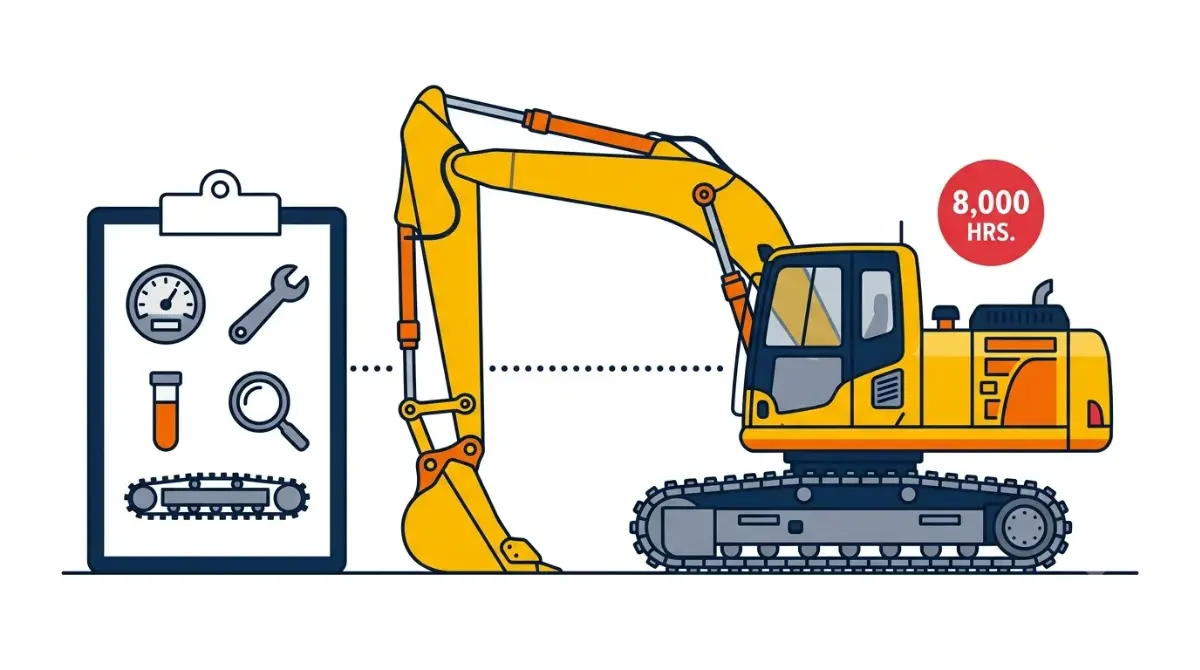
Table of Contents
Is 8,000 hours too many for an excavator?
There is no official hour limit for an excavator. This guide covers mid-size crawler excavators (13 to 25 metric tons), model years 2005 to 2025, pre-Tier 4 through Tier 4 Final. Owners and auctioneers call 8,000 to 10,000 hours “high”; condition decides.
Where the 8,000 to 10,000 number comes from
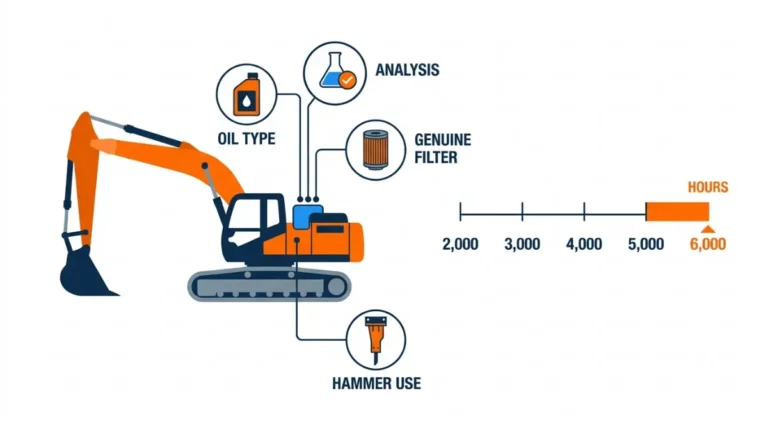
Ritchie Bros., an auctioneer, puts a well-maintained excavator at about 8,000 to 10,000 reliable engine hours. We found no manufacturer, OSHA, EPA or extension source that sets a limit.
Who this covers and where to start
Comparing a listing? Start at section 4. Running your own machine? Read sections 3 and 5. Eyeing a Tier 4? Read section 6. Machines under about 6 tons wear differently; we give no figure for them. Size classes are in our excavator size and cost guide.
ℹ️ Safety Note: Inspecting a running excavator puts you near moving steel and pressurized hydraulic lines. Never check a leak with your hand. Have a qualified technician or inspector do the hands-on checks.
📋 Compliance Note: EPA emissions rules and DEF derate guidance changed in 2025 and 2026 and may change again. Last checked October 14, 2026. Verify state rules with your dealer or agency.
💵 About These Numbers: This article gives hour ranges and shares from the sources named, not market prices. Orientation, not a valuation.
What the hour meter counts and what it misses
An hour meter estimates use, not wear.
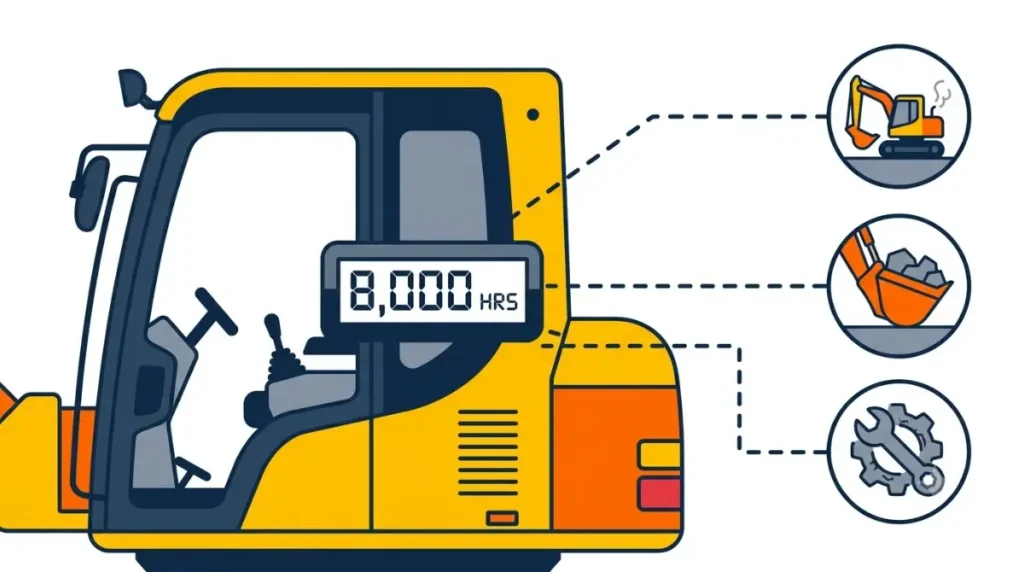
Key-on time versus engine-running time
Owners describe clocks that run whenever the key is on and tach-based meters that count engine revolutions. Your operator’s manual and serial range say which you have.
🔍 Why It Happens: A tach-based meter counts revolutions, so slow running logs fewer hours than the clock.
Idle, load and application
Idling adds hours with little load. An owner notes light utility and quarry work age a machine very differently at 10,000 hours.
How to sanity-check a reading
- Match service records and oil reports to the hours.
- Ask a dealer if the machine can print a history report; availability varies.
- Compare wear to the hours; loose bucket pins suggest poor greasing, an inspector told Equipment World.
- If they disagree, get an independent inspection.
What wears out first at high hours
At high hours the repair risk sits in a few major components.
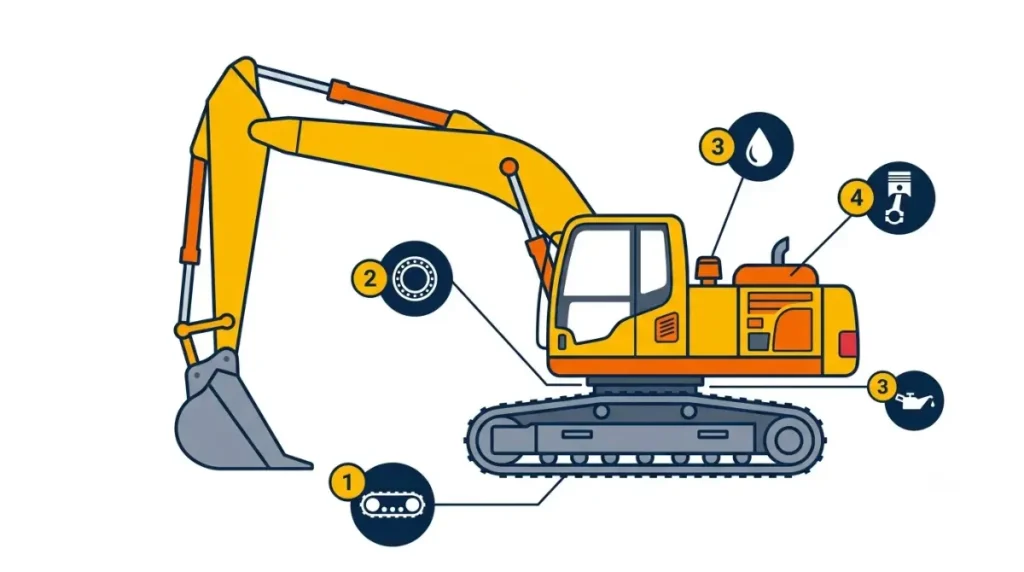
| Component | What to look for | Who confirms |
|---|---|---|
| Undercarriage | Loose pins and bushings, stretched tracks | Dealer, measured against OEM limits |
| Swing bearing | Any visible movement on a roughly 20-ton machine | Inspector, with a dial indicator |
| Hydraulic pump | Oil leaking from the pump, or tramming to one side | Dealer service department |
| Engine | Dark oil, moisture, blow-by at the dipstick | Dealer |
Source: Equipment World inspection guide (February 2010, updated May 2017).
Undercarriage: measure, don’t eyeball
Only measuring shows true undercarriage wear, an inspector told Equipment World. See undercarriage cost per hour.
📉 Cost Reality: Cat says undercarriage typically averages 50% of owning and operating cost (cat.com, viewed October 14, 2026). Cat sells undercarriage; treat it as a manufacturer’s figure.
Pump, swing and engine: leave them to a pro
Pump leaks, swing bearing play and engine blow-by are dealer or inspector calls, not field fixes.
Inspect a high-hour excavator in this order
Inspect cheapest and safest first, then escalate to measured checks and lab work.
Paper and power-off checks
- Match service records and oil reports to the hour meter.
- Walk around powered off: cracks or plated welds, leaks, loose pins.
- Cold start: smoke, hard starting, fault codes.
- Running checks by the seller’s operator, while you stay clear.
🔧 Stop Here: Stop after step 4, or sooner if records and wear disagree, the swing bearing moves, the pump leaks, welds are plated or the cold start smokes. Steps 5 to 9 need gauges, so hire an inspector.
Measured checks and the written report
- Swing bearing play, measured by the inspector.
- Hydraulic oil analysis history, or a fresh sample (for example, Cat’s fluid analysis program).
- Undercarriage, measured against OEM limits by the dealer.
- Engine dipstick and blow-by; on a Tier 4, aftertreatment fault history.
- A written dealer or independent inspection report.
⚠️ Watch Out: Never work under a raised boom or bucket. OSHA’s blocking and cribbing rule requires raised equipment to be blocked; it binds employers, so treat it as your baseline.
Your manual and serial range govern wear limits and procedures.
Repair or walk away: the math at 8,000 hours
At high hours, the meter matters less than what the next repair costs against a lower-hour machine.
A simple repair-versus-value test
- Get written quotes for what the inspection found, from a dealer or independent shop.
- Add them to the asking price.
- Compare that total with a comparable lower-hour machine, using dated listings.
If your total nears or exceeds the lower-hour price, negotiate the quotes off or walk away. We give no repair prices because we found no current, sourced figures.
When renting or buying newer wins
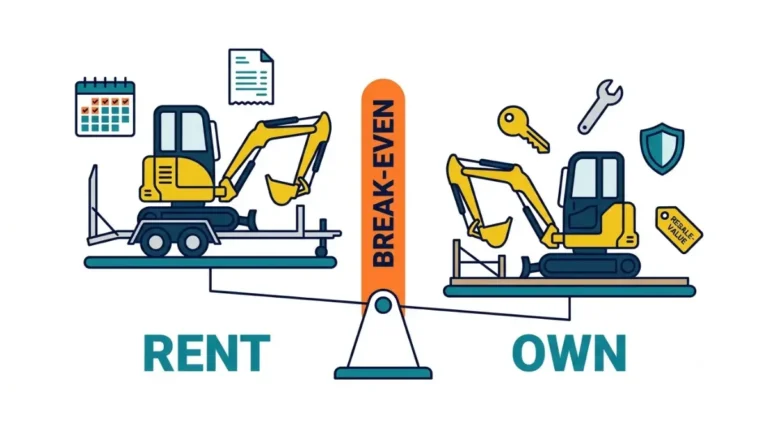
Below your break-even hours, renting usually costs less. Estimate your real hours with our equipment billable hours per year guide, then see how owning versus operating cost splits.
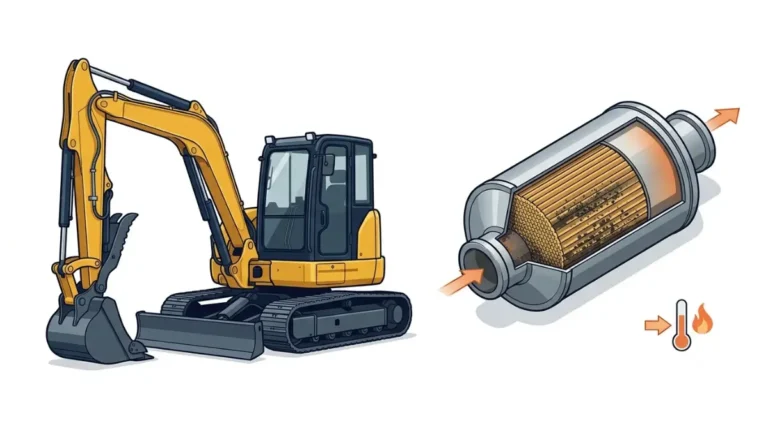
Tier 4 changes the high-hour math
Tier 4 engines add exhaust controls that older engines lack, so ask before you price one.
What changes by emissions era
Pre-Tier 4 engines have no aftertreatment. EPA phased in its Tier 4 standards by engine power, roughly 2008 to 2015 per DieselNet, and whether a machine has a DPF, SCR with DEF or both depends on power and brand. Costs are in our Tier 4 Final DPF and DEF costs guide.
What to ask the seller
Ask the dealer which tier the engine meets, which aftertreatment it has, and whether it can read the fault history, including past derates.
🔧 Stop Here: Stop at any active aftertreatment fault, or a seller who cannot show fault history. Ask a dealer service department.
Why removal is not a shortcut
Removing or bypassing emission controls is prohibited under the Clean Air Act. EPA proposed on July 9, 2026 to remove DEF-failure derates from new nonroad engines (EPA fact sheet); that is a proposal, not final.
When to stop and call a qualified technician
Signs to walk away
| Finding | Who to call |
|---|---|
| Records and wear disagree with the hour meter | Independent inspector |
| Visible swing bearing movement | Inspector, to measure it |
| Leak at the hydraulic pump | Dealer service department |
| Cracks or plated welds at pivots | Inspector; consider walking away |
| Active aftertreatment fault on a Tier 4 | Dealer service department |
What to ask for
✅ Do This: Ask a dealer or independent inspector for a written report covering swing bearing play, hydraulic performance, oil analysis and undercarriage measurements.
Excavator high-hours questions
1. How many hours is too many for an excavator?
There is no official limit for how many hours is too many for an excavator; auctioneers cite 8,000 to 10,000, but records and inspection decide.
2. Is 8,000 hours a lot for an excavator?
Yes, 8,000 hours is inside the range auctioneers call high for an excavator, but records and the work it did change what that means.
3. How do I know the excavator hour meter reading is real?
Match service records and oil reports to the excavator hour meter and wear; if they disagree, get an independent inspection.
4. What breaks first on a high-hour excavator?
On a high-hour excavator, watch the undercarriage, swing bearing, hydraulic pump and engine; a dealer or inspector should confirm each.
5. Is it worth rebuilding an excavator pump at 8,000 hours?
Rebuilding an excavator pump pays only if a written quote plus the price stays below a comparable lower-hour machine.
6. How much does an excavator undercarriage cost to replace?
We found no current, sourced excavator undercarriage cost; get a written quote. Cat says undercarriage averages about half of owning and operating cost.
7. Do Tier 4 Final excavators have more problems at high hours?
We found no source saying Tier 4 Final excavators fail more; ask the dealer for fault history, since aftertreatment adds parts older engines lack.
8. Is it legal to remove emission controls from an excavator?
No. Removing or bypassing emission controls is prohibited under the Clean Air Act and can cost resale value, warranty coverage and liability protection.
9. When should I walk away from a high-hour excavator?
Walk away from a high-hour excavator if records and wear disagree, the swing bearing moves, the pump leaks or a fault is active; call an inspector.
Your next step
No hour count settles the question. Records, a measured inspection and a written quote do. Before you bid, get a dealer or independent inspector’s written report, then test the total against a lower-hour machine or a rental.